Our story

From a cardboard box to a sexy smart scoreboard.

Flippr took us two years, a lot of MDF, a cardboard detour, a 3D printer and many hours in Vietnamese coffee shops. This is how it came to be.

October 2015

It started in Vietnam

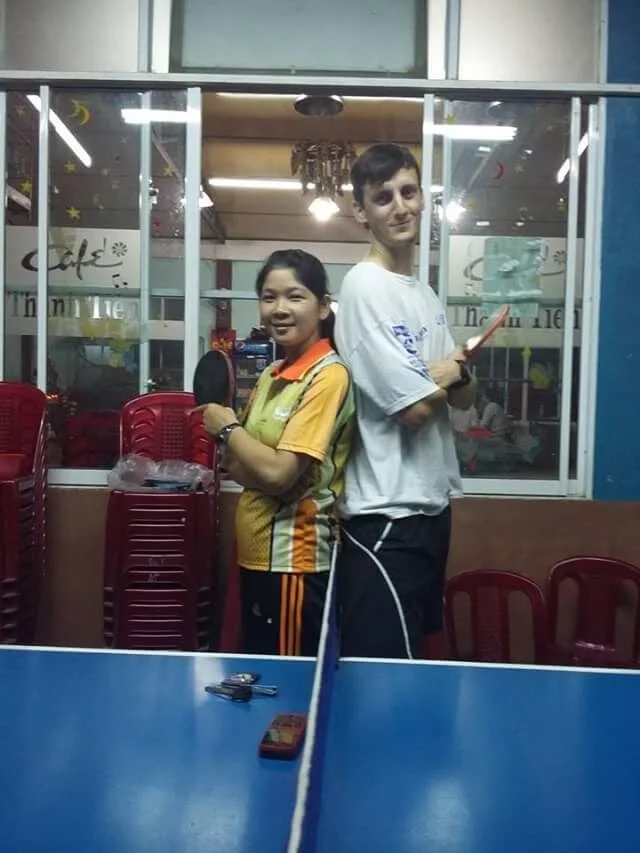
Our story starts in Vietnam in October 2015. That's where Roel, one of our two co-founders, picked up a table tennis bat for the first time, with a private coach. He fell in love with the sport and never looked back.

Roel is a software engineer. After years of writing code that only lives on a screen, he wanted to build something you can hold.

Roel with his coach in Vietnam, where it all began

2022

First, we made carbon blades

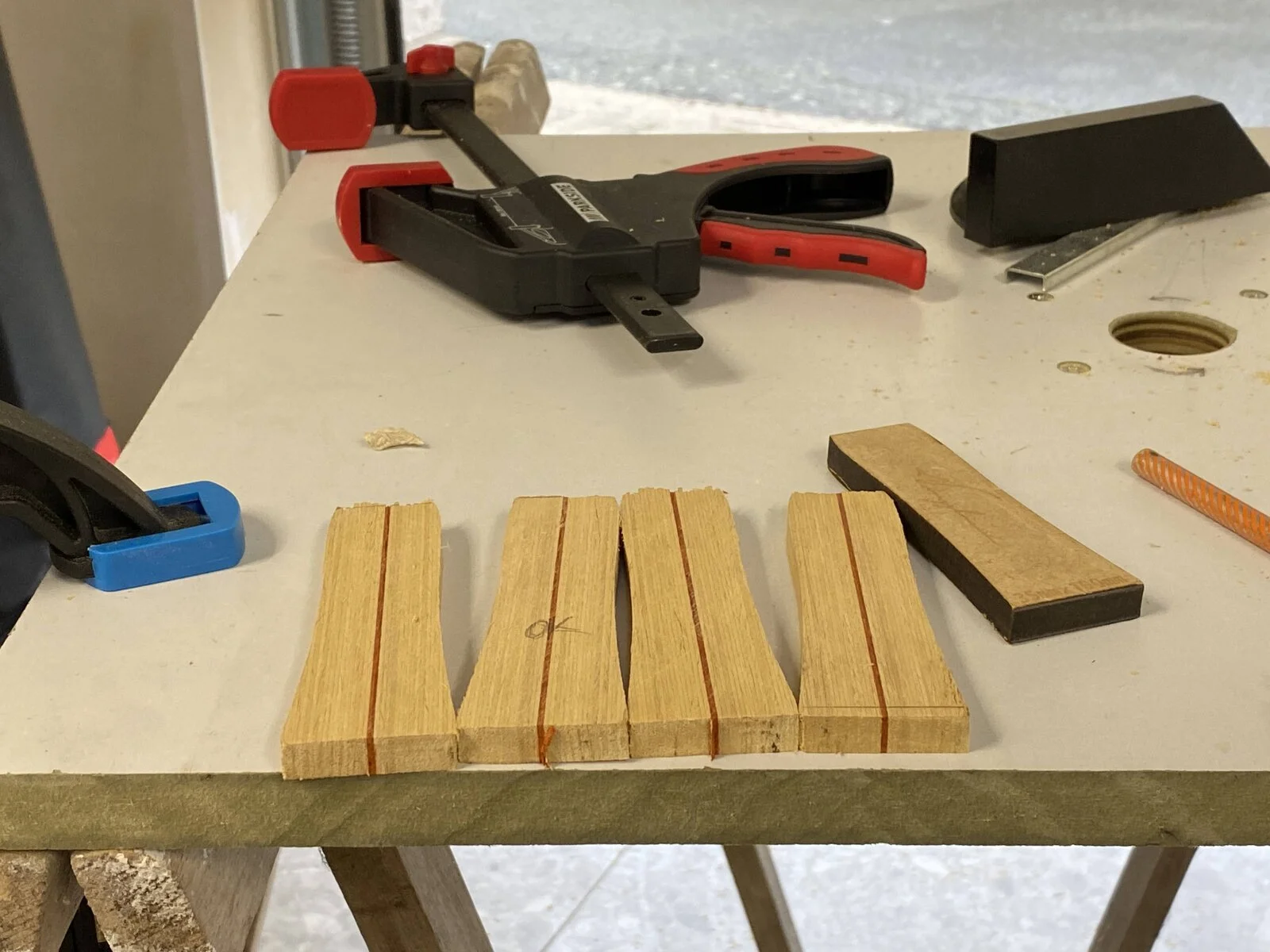
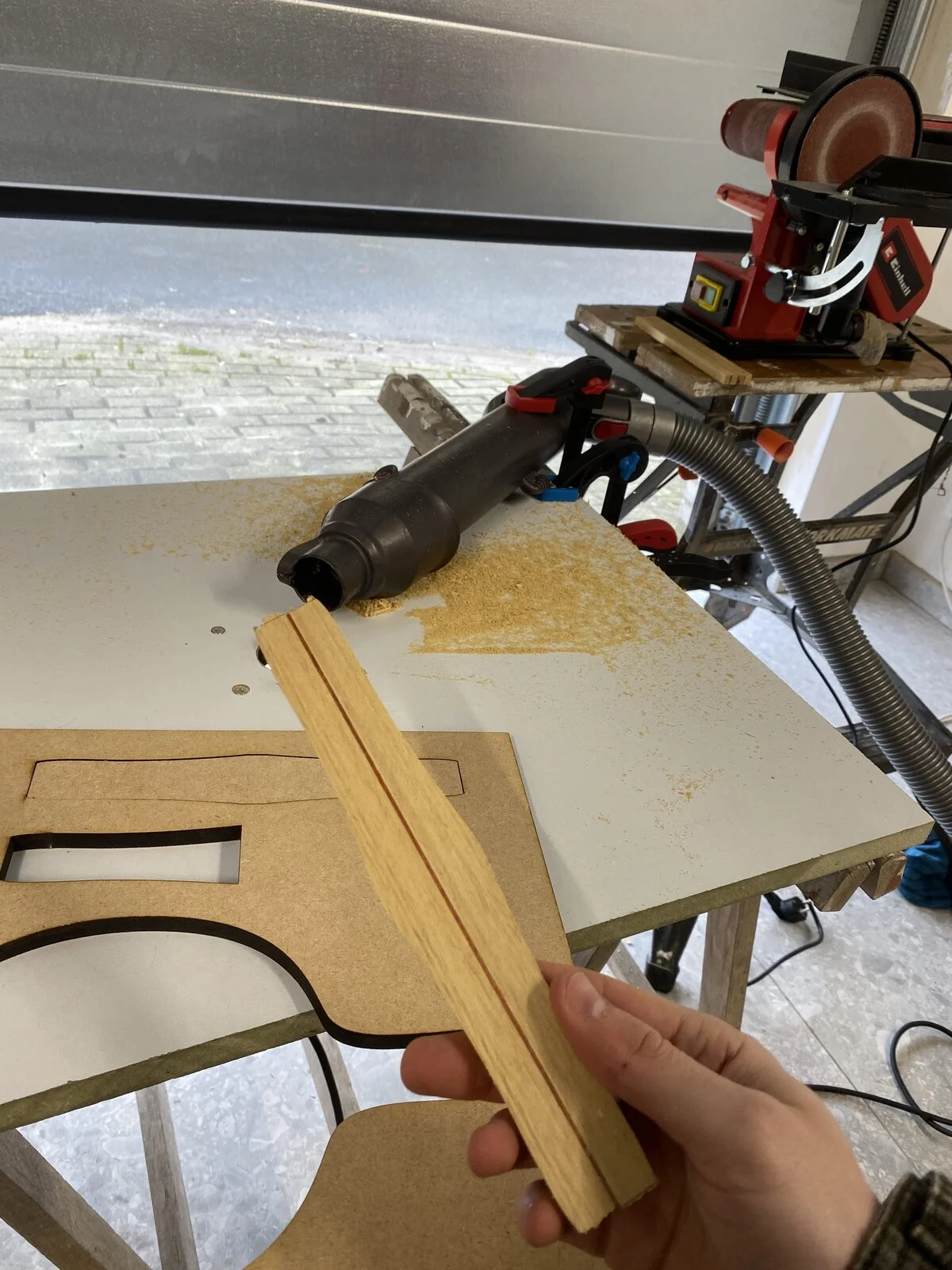
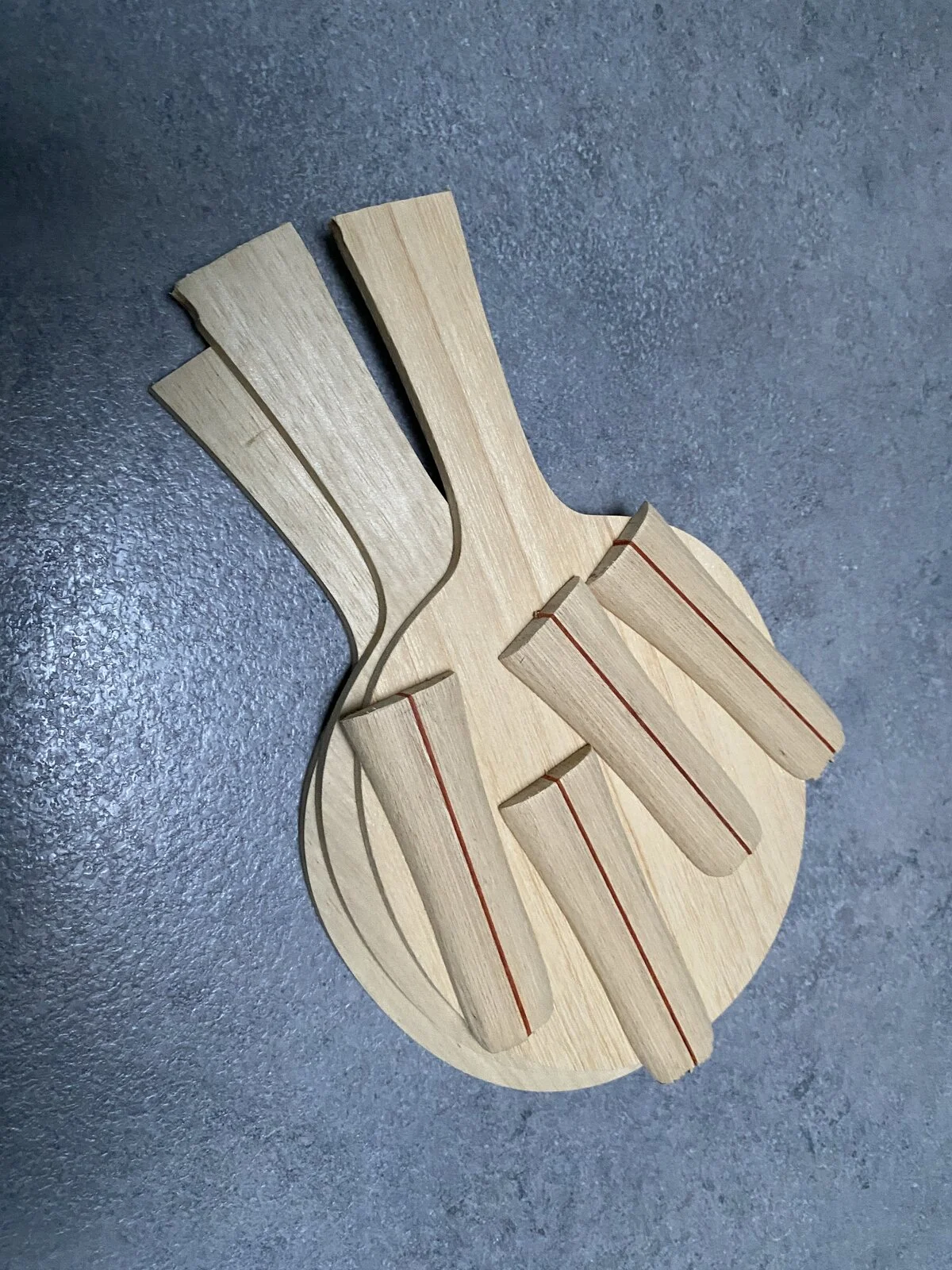
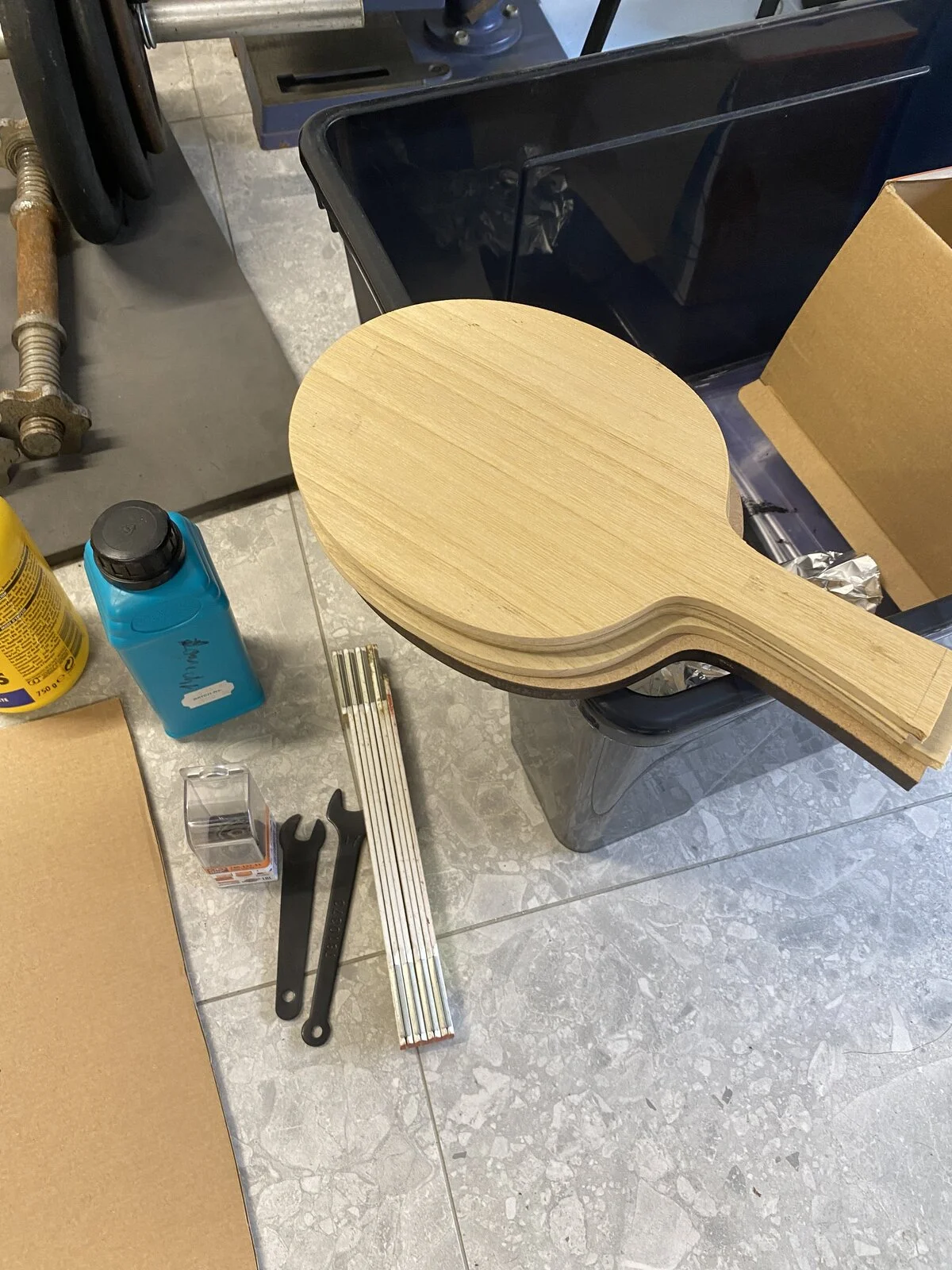
Before we touched any electronics, we made our own carbon table tennis blades. We cut the blades, glued up the handles and shaped them on a router table with MDF templates.

It was fun, but something was missing. With our software background, we wanted a mix of the physical world and the software world. A blade has no software. And because table tennis is the sport we love most, one question kept coming back: why is scorekeeping still so clumsy? Could it be nice, well designed and still affordable? An electronic scoreboard scratched that itch much better.

A stack of blades, cut and ready
Handle blanks, glued up
Shaping a handle with an MDF template
Blades and handles, ready to assemble

June 2024

Prototype one: wires everywhere

The first idea was small: something for training sessions. A magnetic, battery-powered gadget you clip onto any table, with buttons to add points during a friendly match.

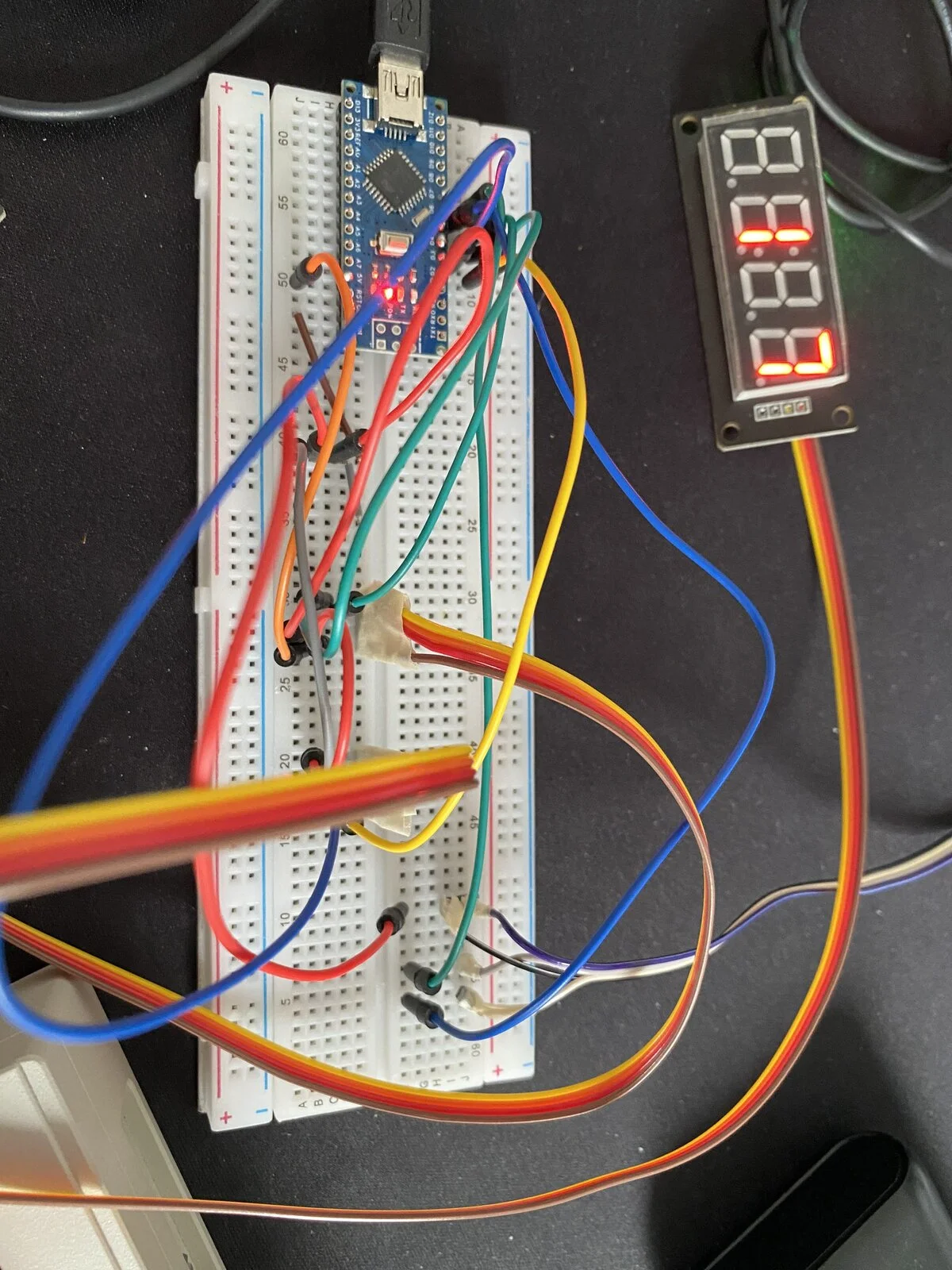
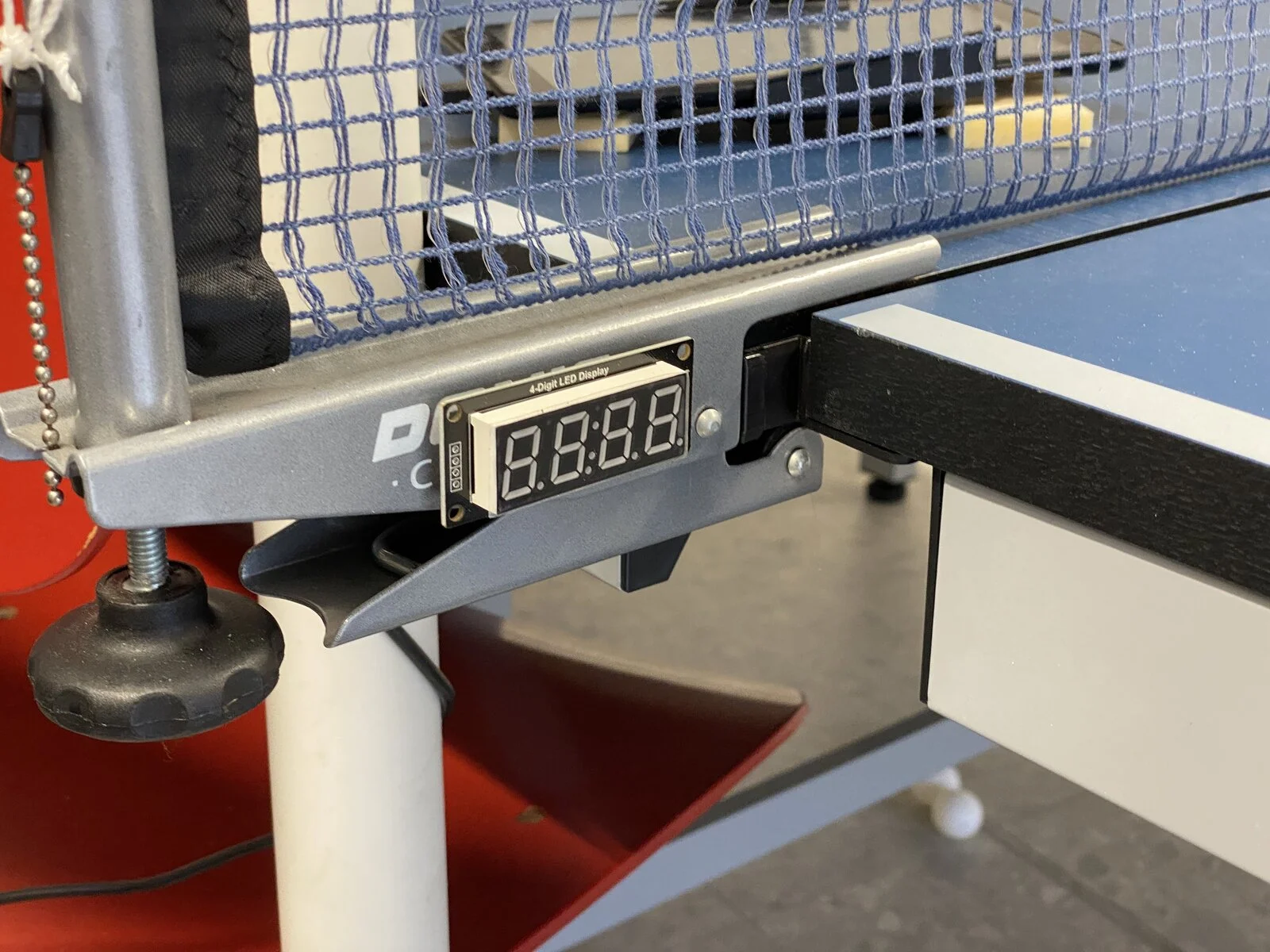
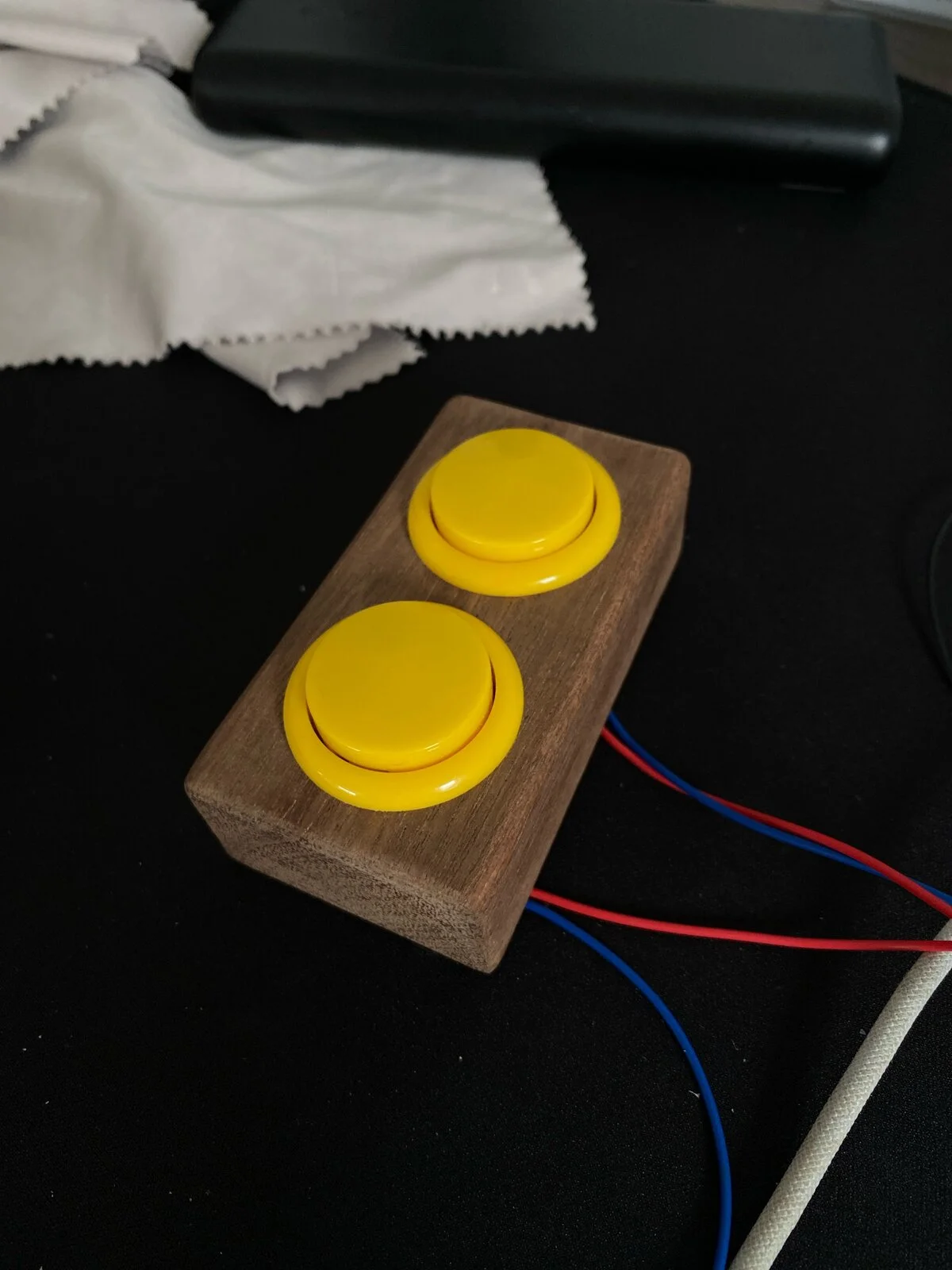
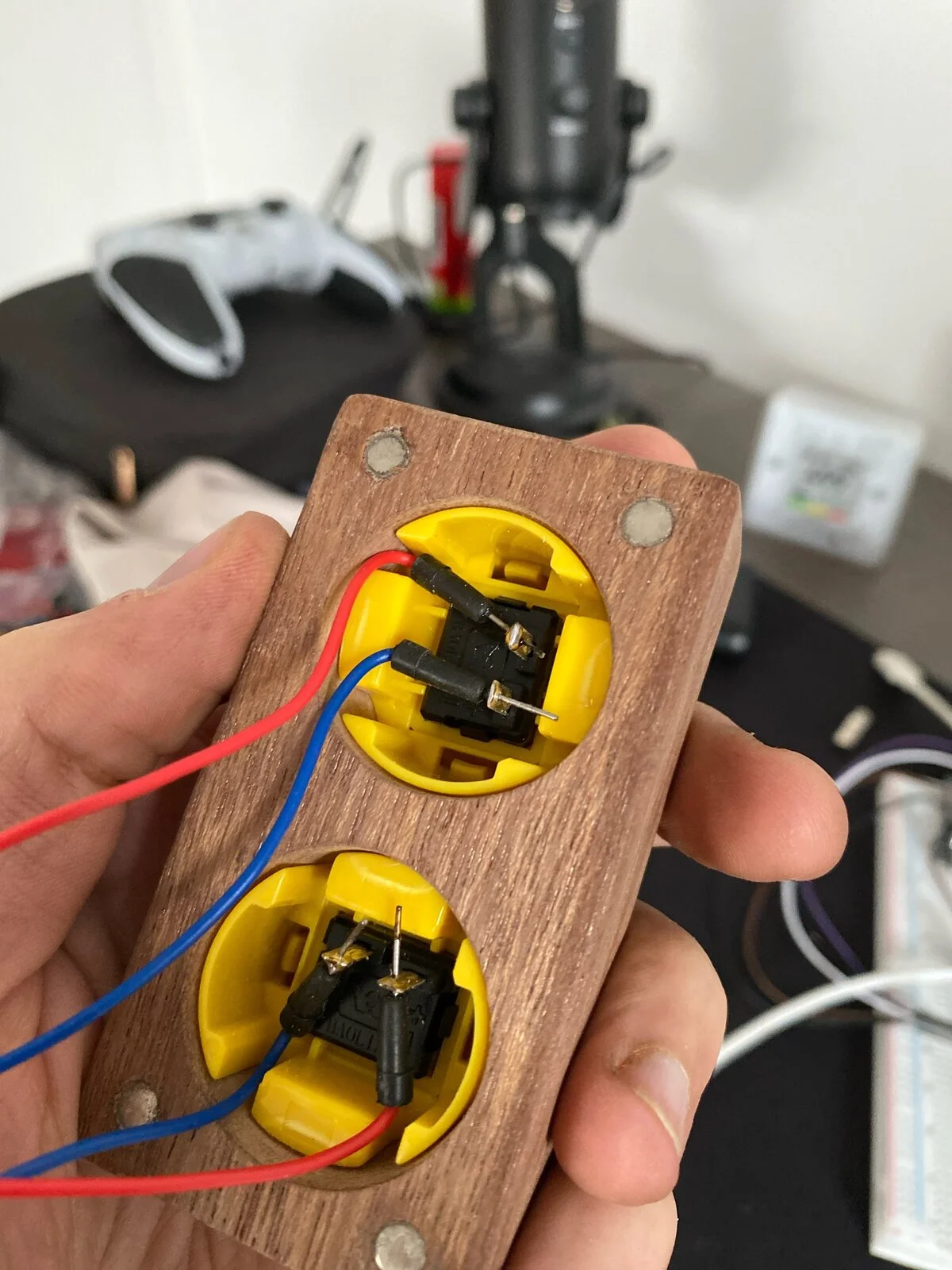
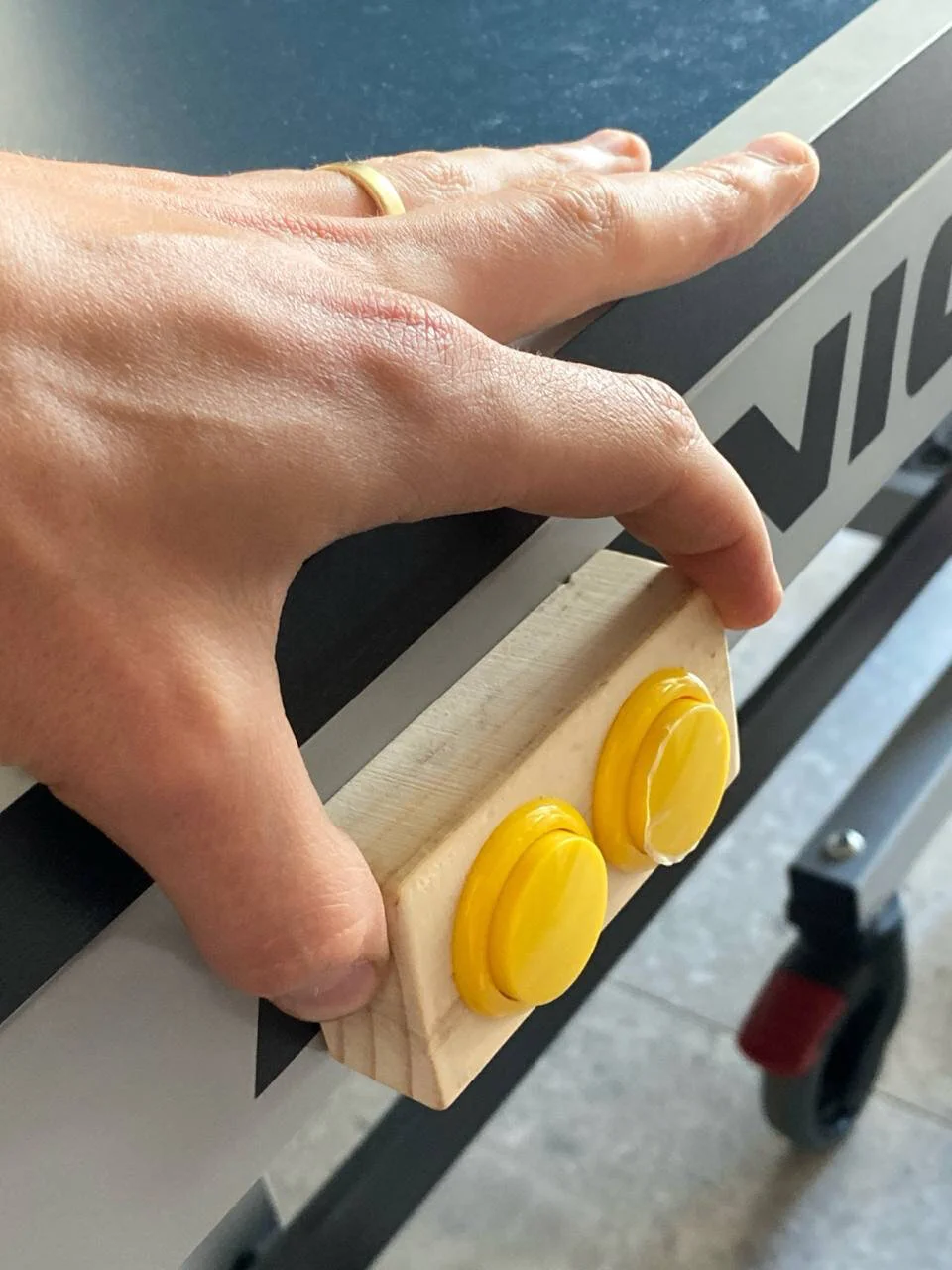
The first version used a four-digit seven-segment LED display driven by an Arduino Nano. The button box was solid wood, fitted with arcade buttons. The display was a separate piece, attached with a magnet to the net post. The buttons sat in their own controller at the corner of the table, near the players.

It was clunky, full of wires and hard to set up. But it worked.

Seven-segment display and an Arduino Nano on a breadboard
First signs of life
The display, clamped to the net post
Solid wood and arcade buttons
Wiring the buttons
Wiring the buttons
The controller at the corner of the table

Autumn 2024

One cube to rule them all

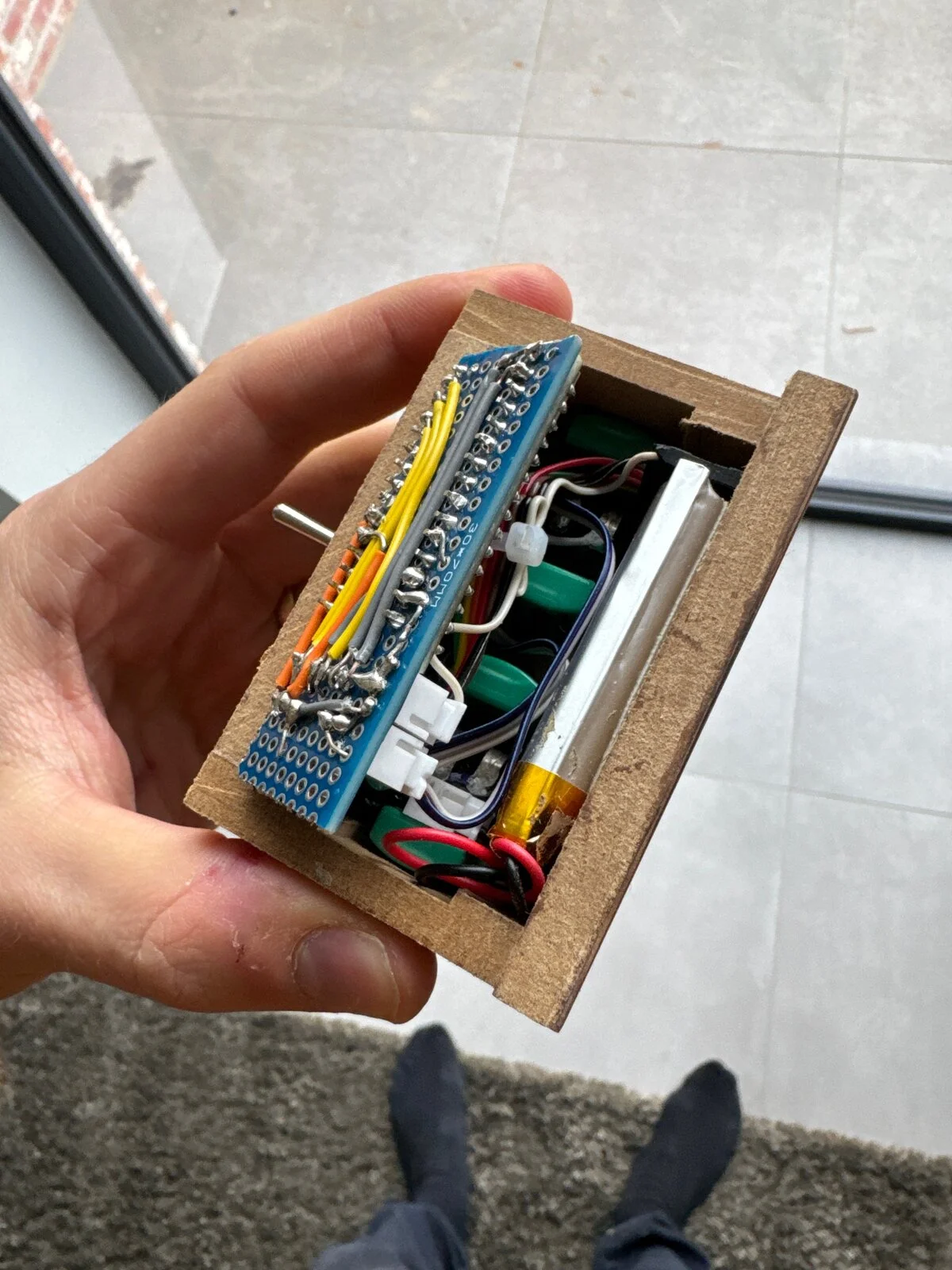
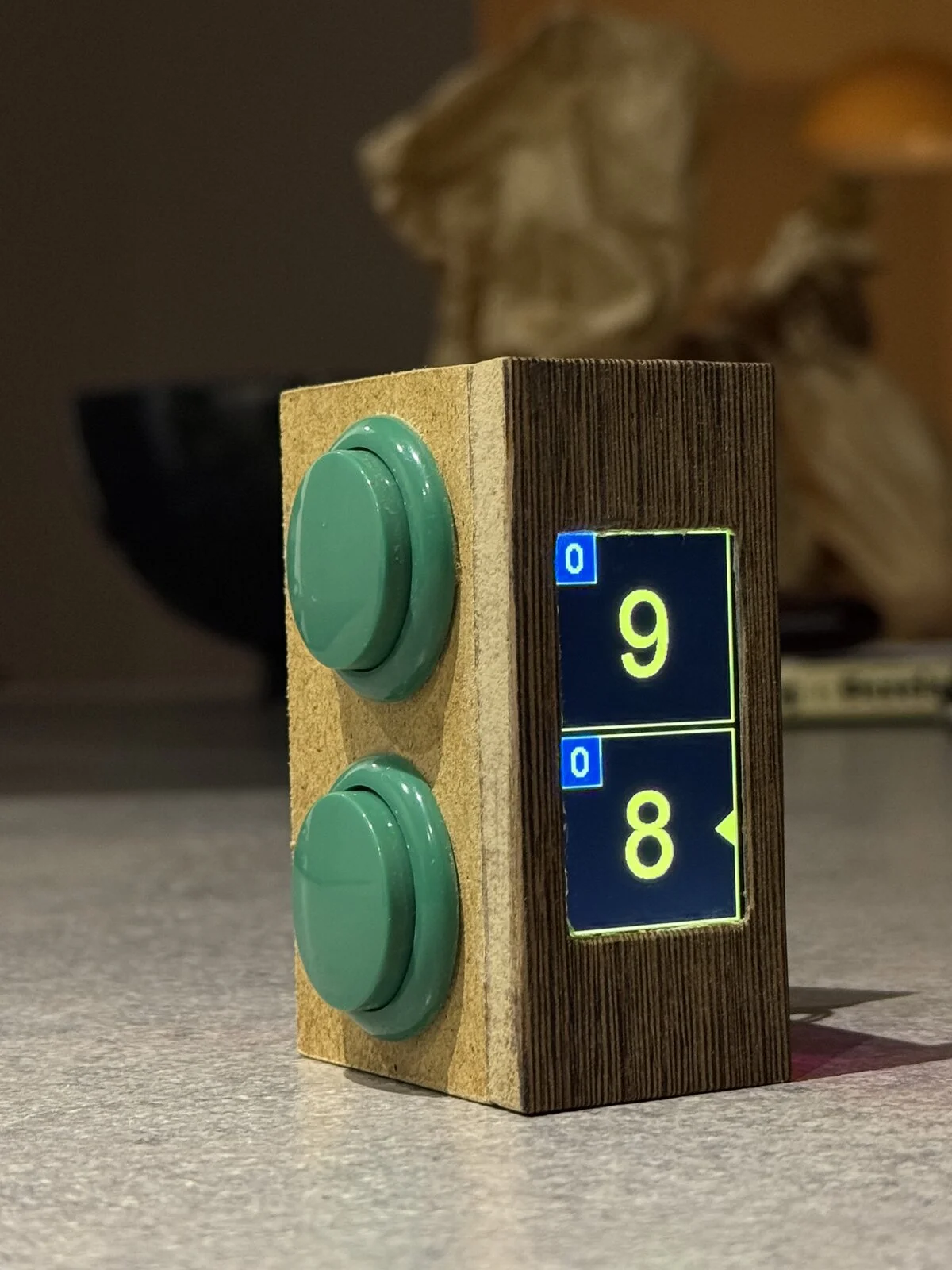
Two separate parts was one too many. We wanted a single small cube that clicks magnetically onto the table: the score on top, big arcade buttons on the side, a battery and an on/off switch inside.

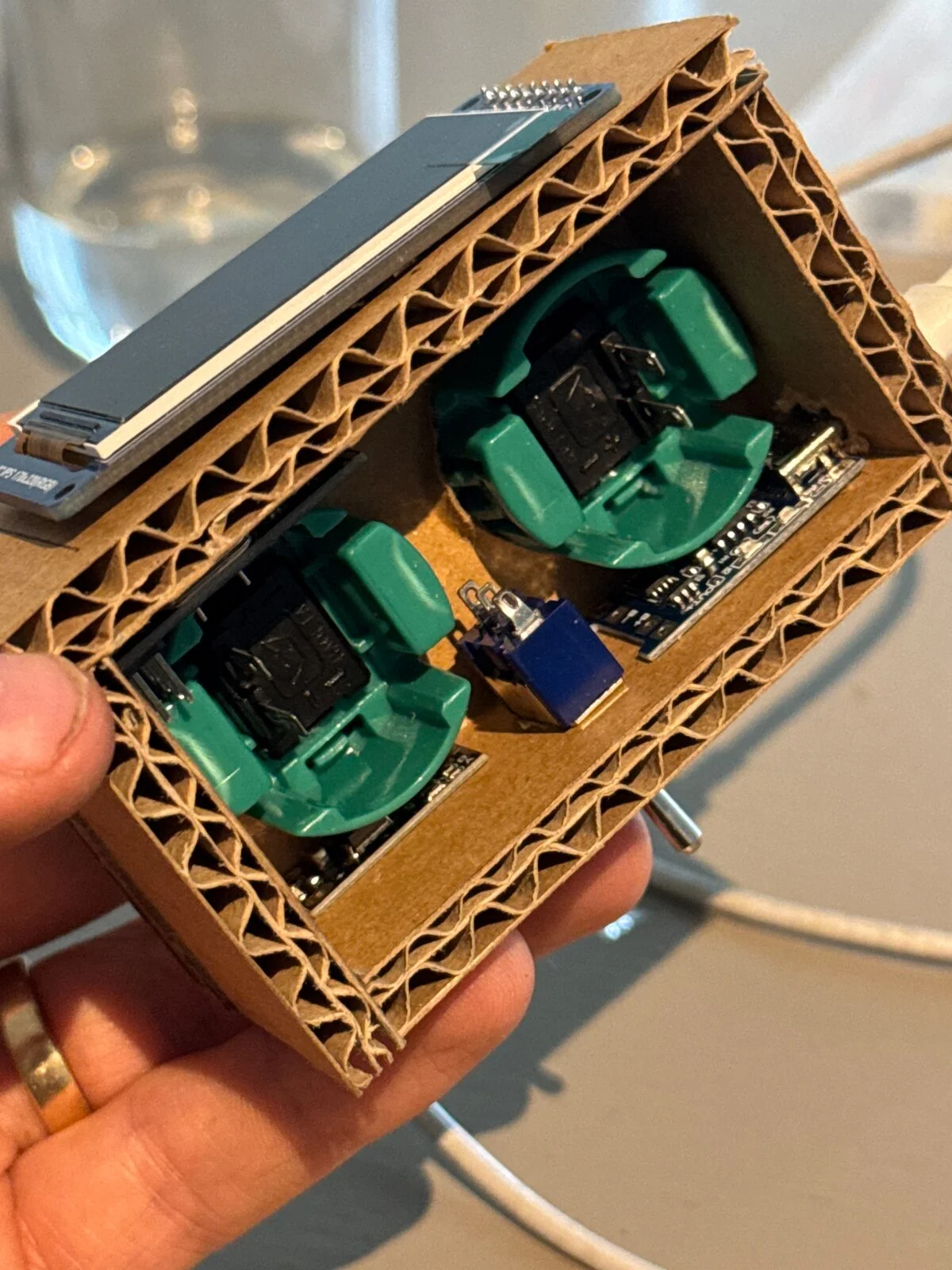
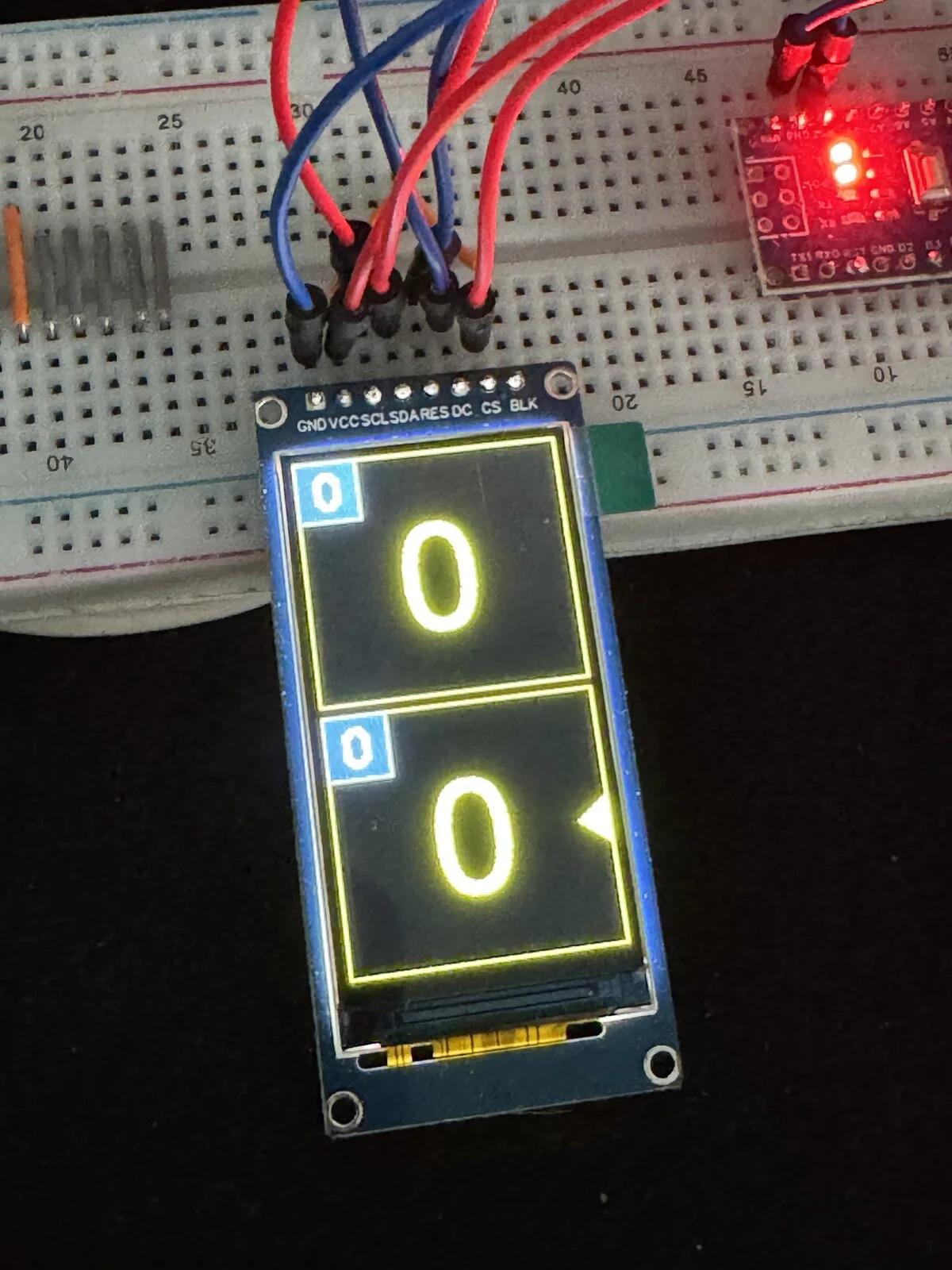
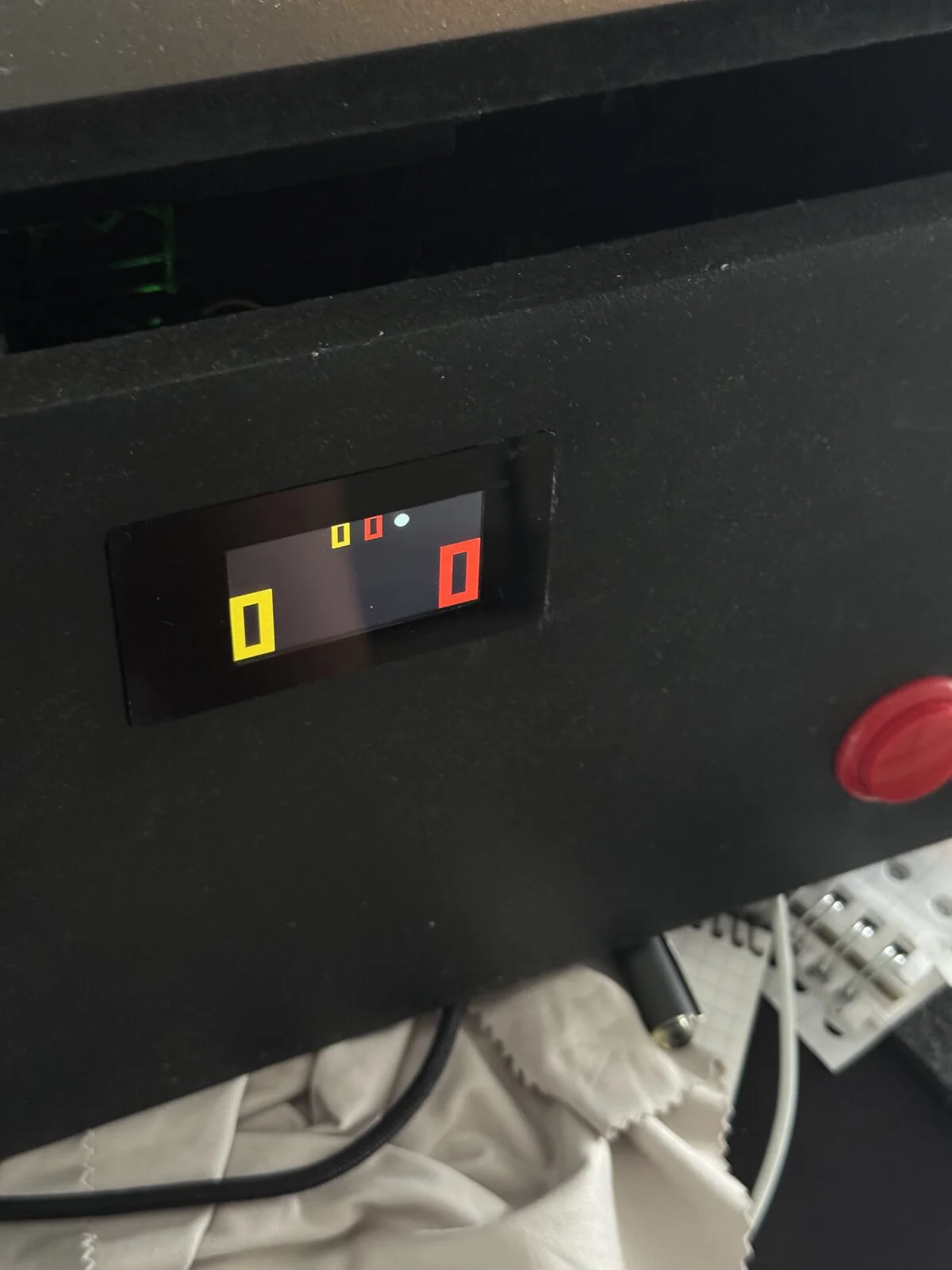
We built it in cardboard first, just to see if the electronics would fit. When that worked, we swapped the seven-segment display for a colour LCD. Now it could show who serves, game and set scores at the same time, and use colour to make it easier to read.

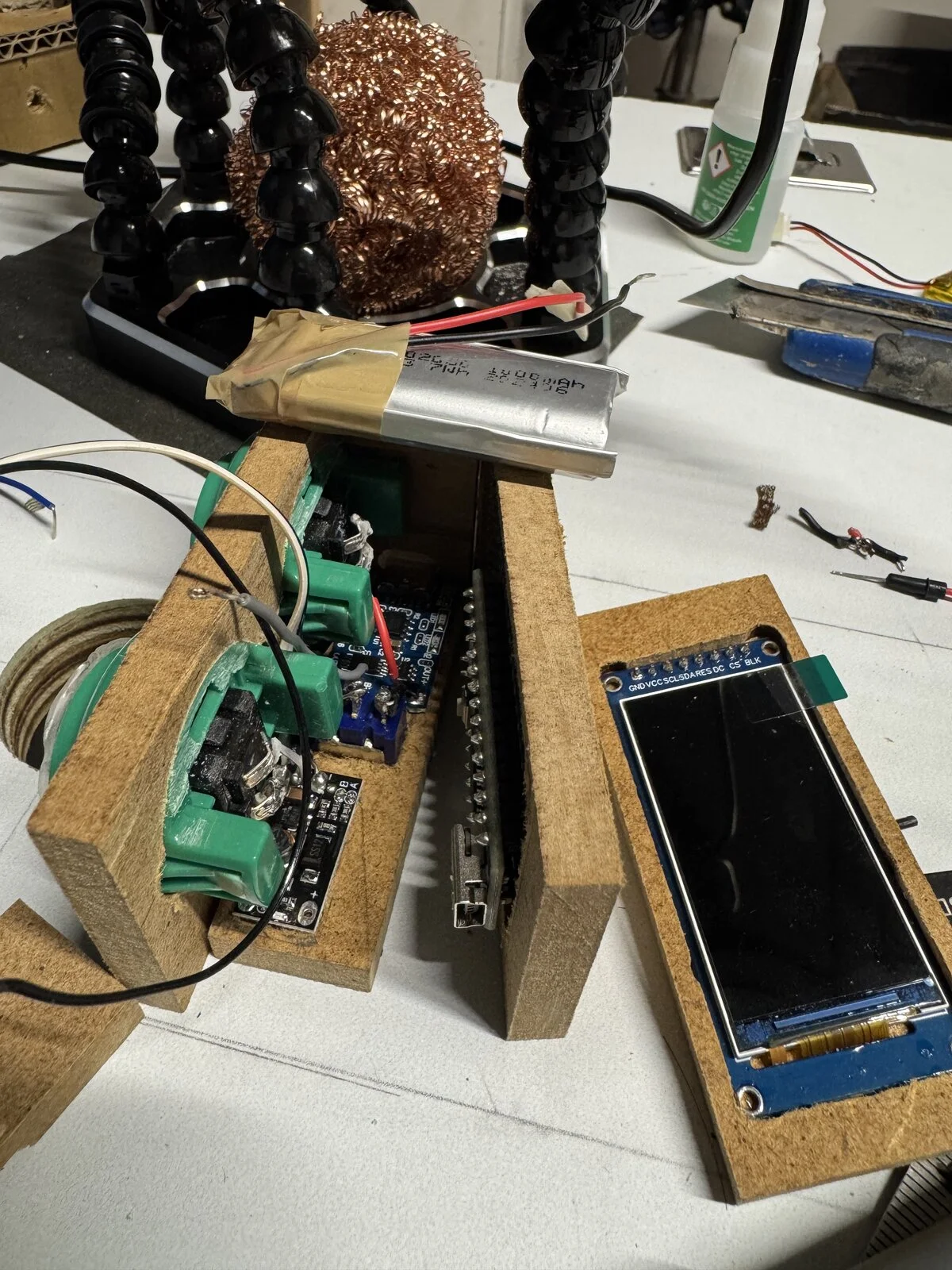
Then we rebuilt it in MDF. That was hard: we didn't have tools for woodwork at such a small scale. But in the end we hacked together something that worked quite well.

The cardboard proof of concept
Moving to a colour LCD
Cutting MDF at a tiny scale
Everything packed inside
The finished cube
The finished cube
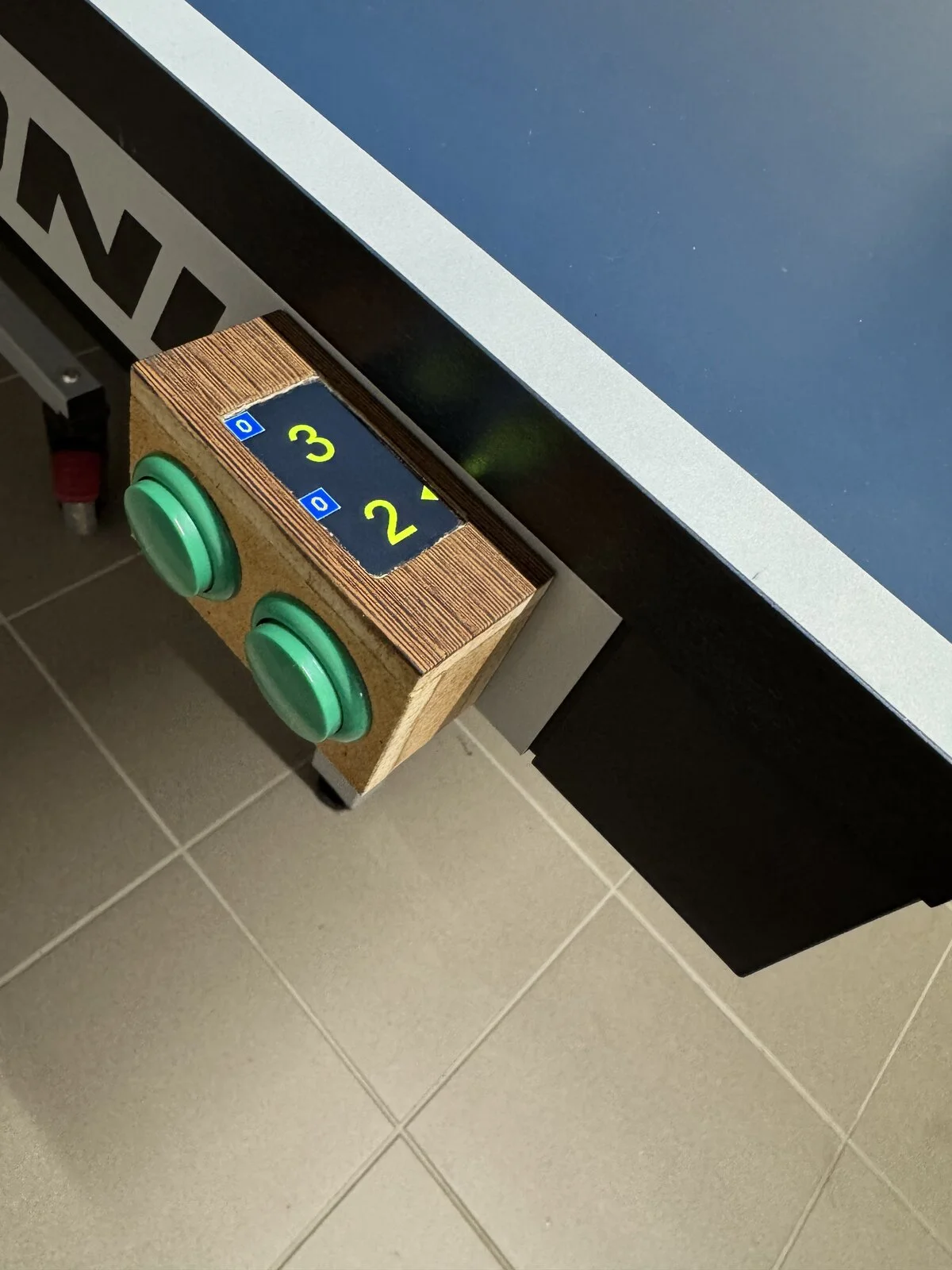
Clipped onto the table

Late 2024

The idea we had to let go

Then the cube went to real training sessions. Every point meant one or two steps to the table. The score was hard to see. For a simple friendly match, it just didn't feel right.

So about half a year after the first prototype, we shelved it. We stopped thinking about a small device on the table, and started on something bigger: a scoreboard built for the umpire.

The aha moment

Why are we still using paper?

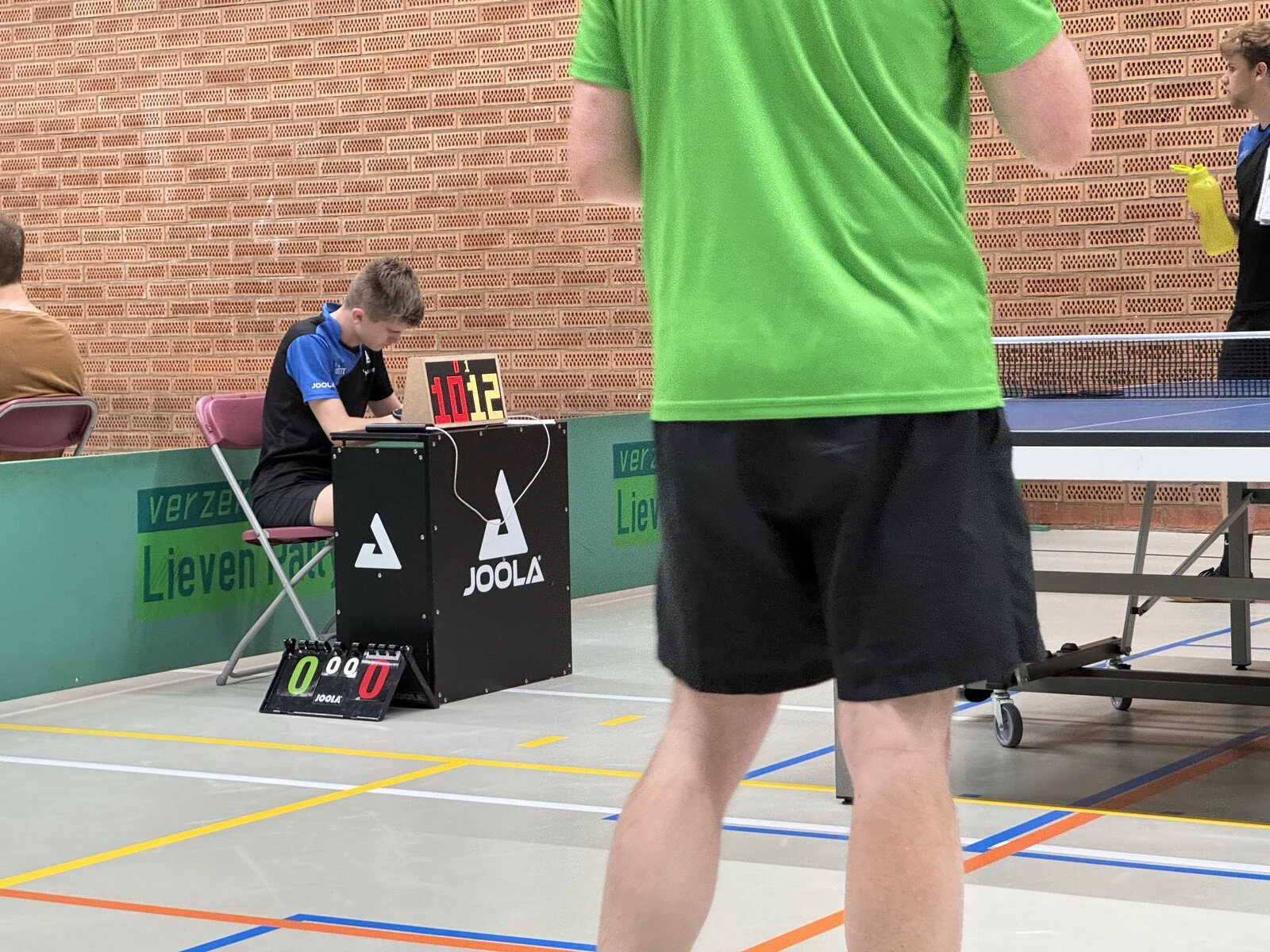
In Belgium, the VTTL (the Flemish Table Tennis League) runs table tennis in Flanders: the clubs, the players and the league competitions. And the VTTL has an API. Every league match, every result between players and every player ranking is online. That made us think: why do we still write scores on paper, then type them into a computer by hand, make mistakes and sync everything afterwards? It felt clunky. And a bit silly.

An ESP32 has Wi-Fi and Bluetooth. So a scoreboard could connect to the internet and send the match straight to the VTTL platform.

And there was a second problem to solve. In league matches, the players take turns to umpire. Often the umpire is checking their phone, or still upset about the match they just lost. With a paper scoreboard, the umpire flips the numbers by hand. They also have to remember who serves, when to change ends and what happens at deuce. That's where the mistakes creep in.

With Flippr, the umpire just presses a button for every point. The scoreboard does the rest. It knows the official rules, so it keeps track of the serve, the ends and deuce by itself. Fewer mistakes, and the result syncs in real time. Plus a live widget, so people who can't be there can follow the match point by point.
Press a button for each point. The scoreboard handles the rules, the sync and the live feed.

Early 2025

Dots, in a Vietnamese coffee shop

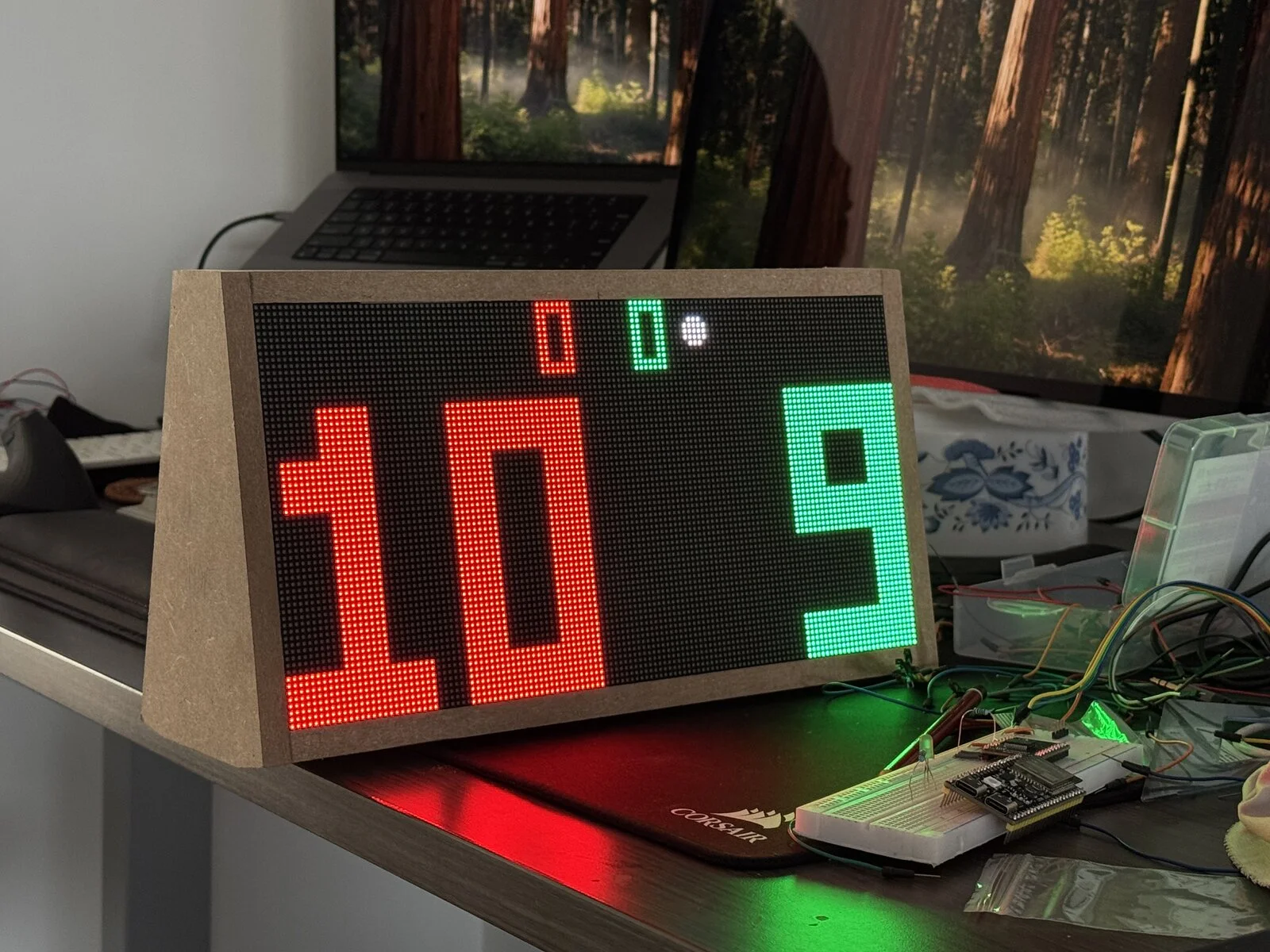
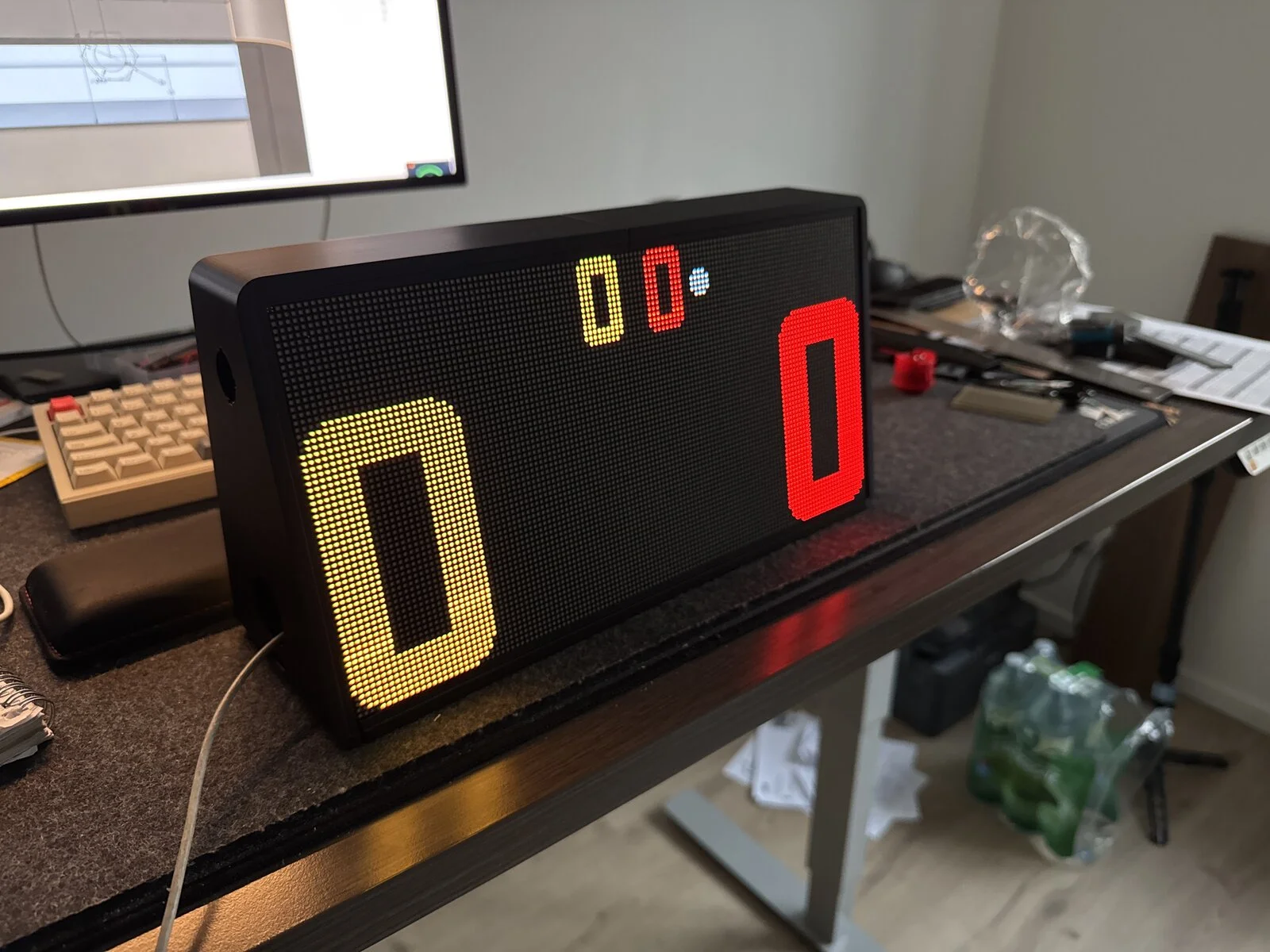
We wanted the feel of the old plastic flip scoreboards, but electronic. A box with two slanted displays: a big one for the players, a small one for the umpire. And just two big buttons to run the whole match, even to undo a point. Like an old arcade game.

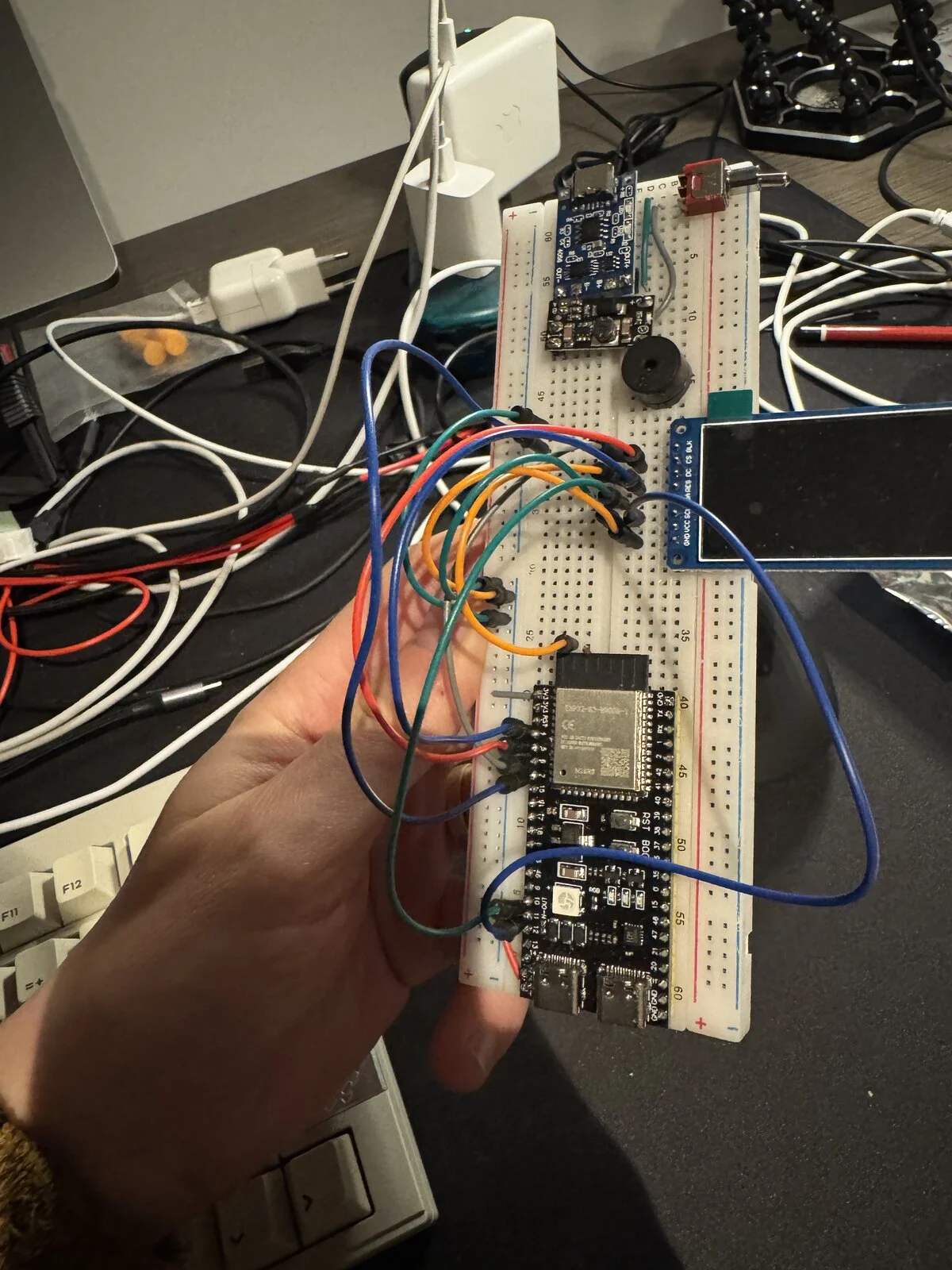
We looked for a board that could drive two displays and landed on an ESP32. The display idea came from an airport. On his way to visit his family-in-law, Roel saw the big dot matrix screens that show adverts. Up close, each screen is made of smaller rectangular panels, chained together. Those dots had exactly the scoreboard vibe we were after.

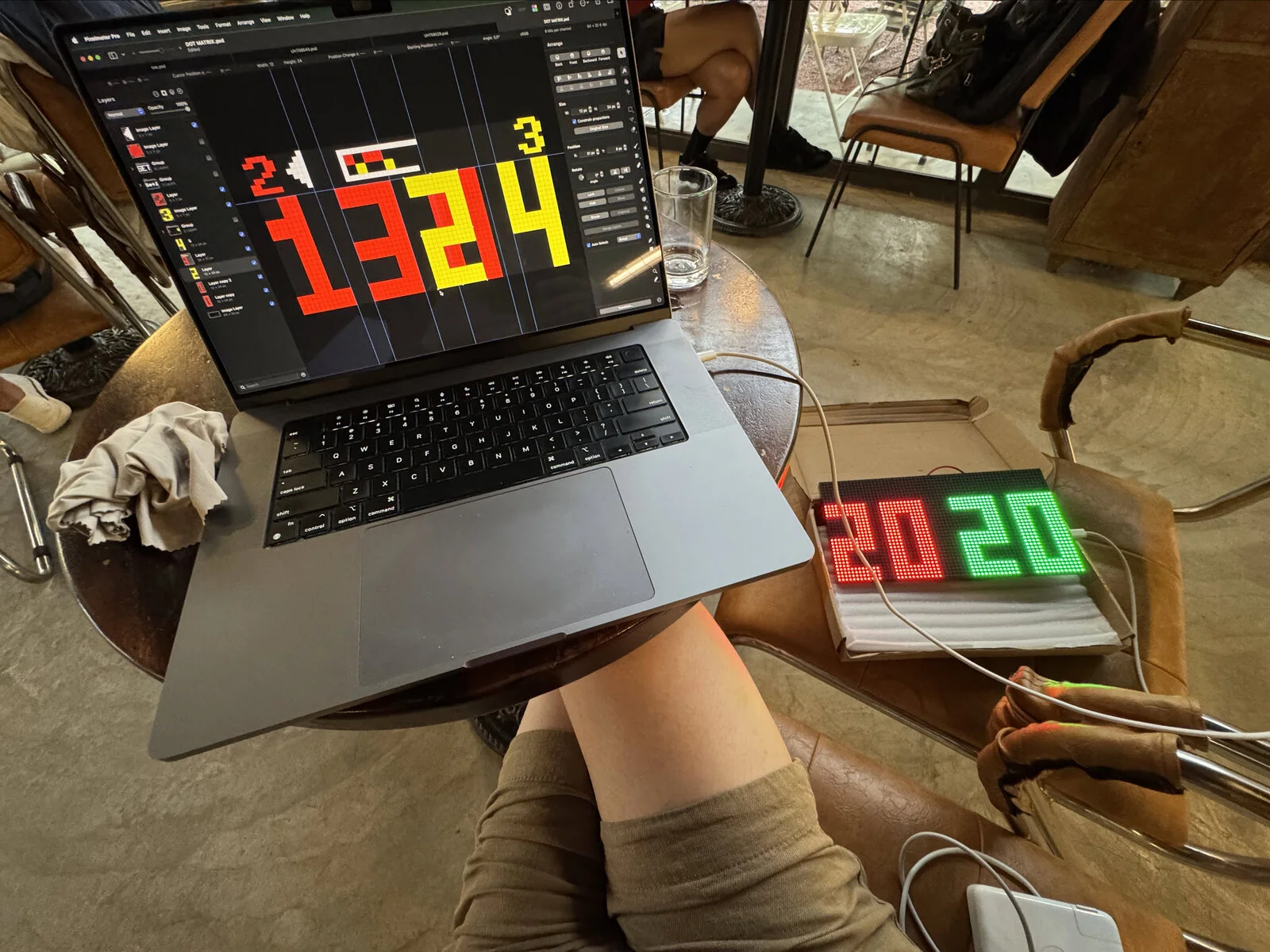
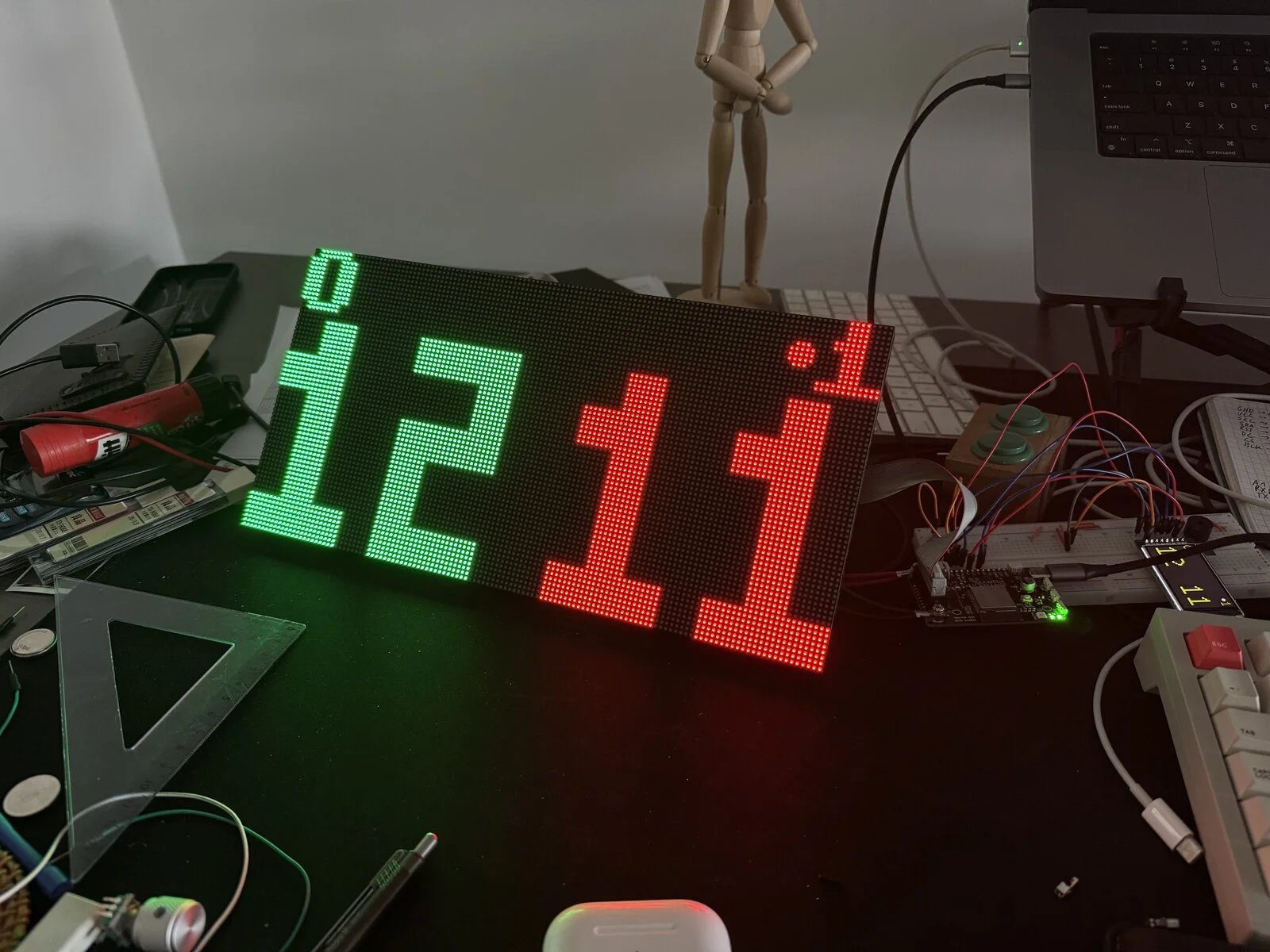
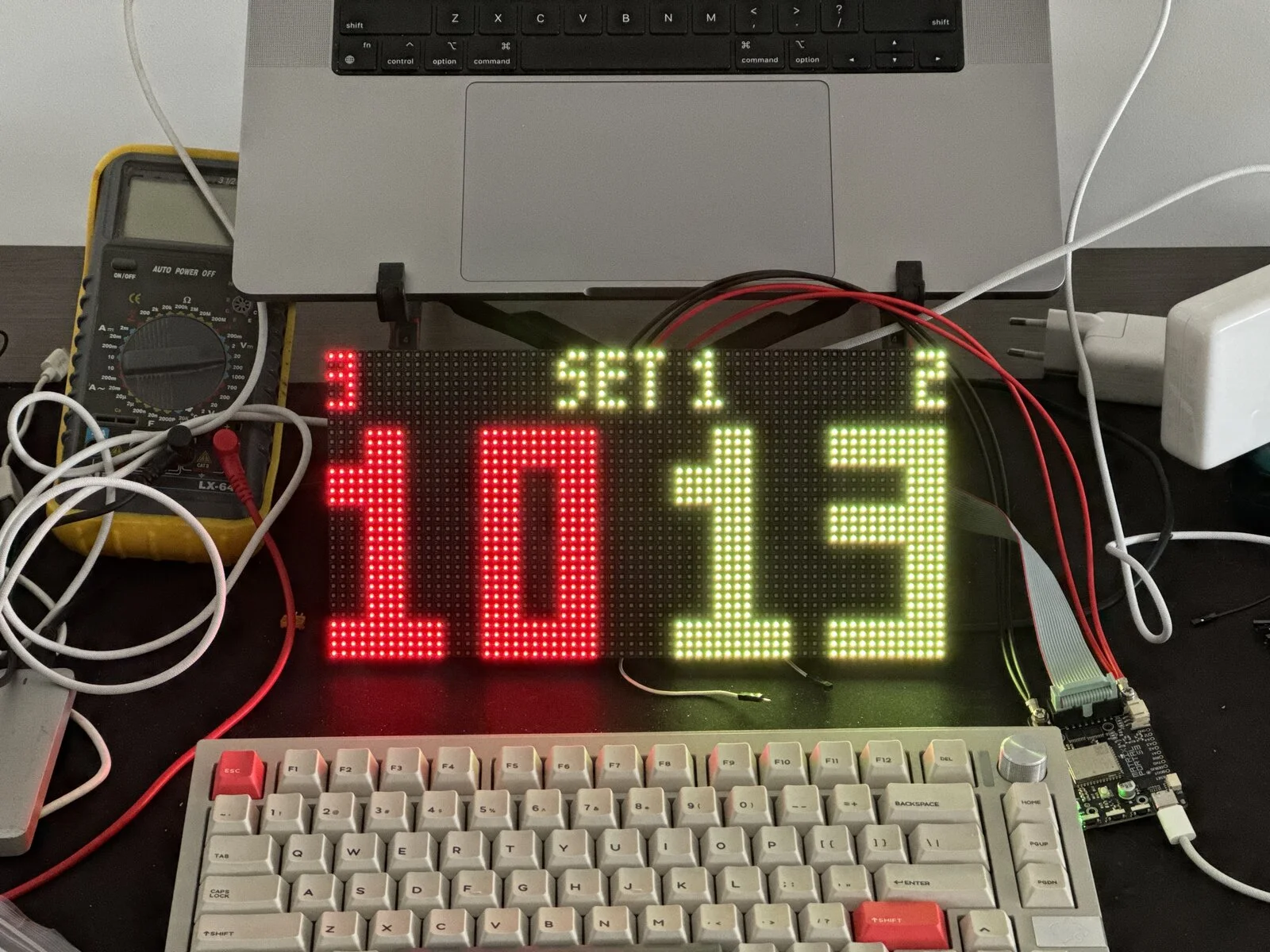
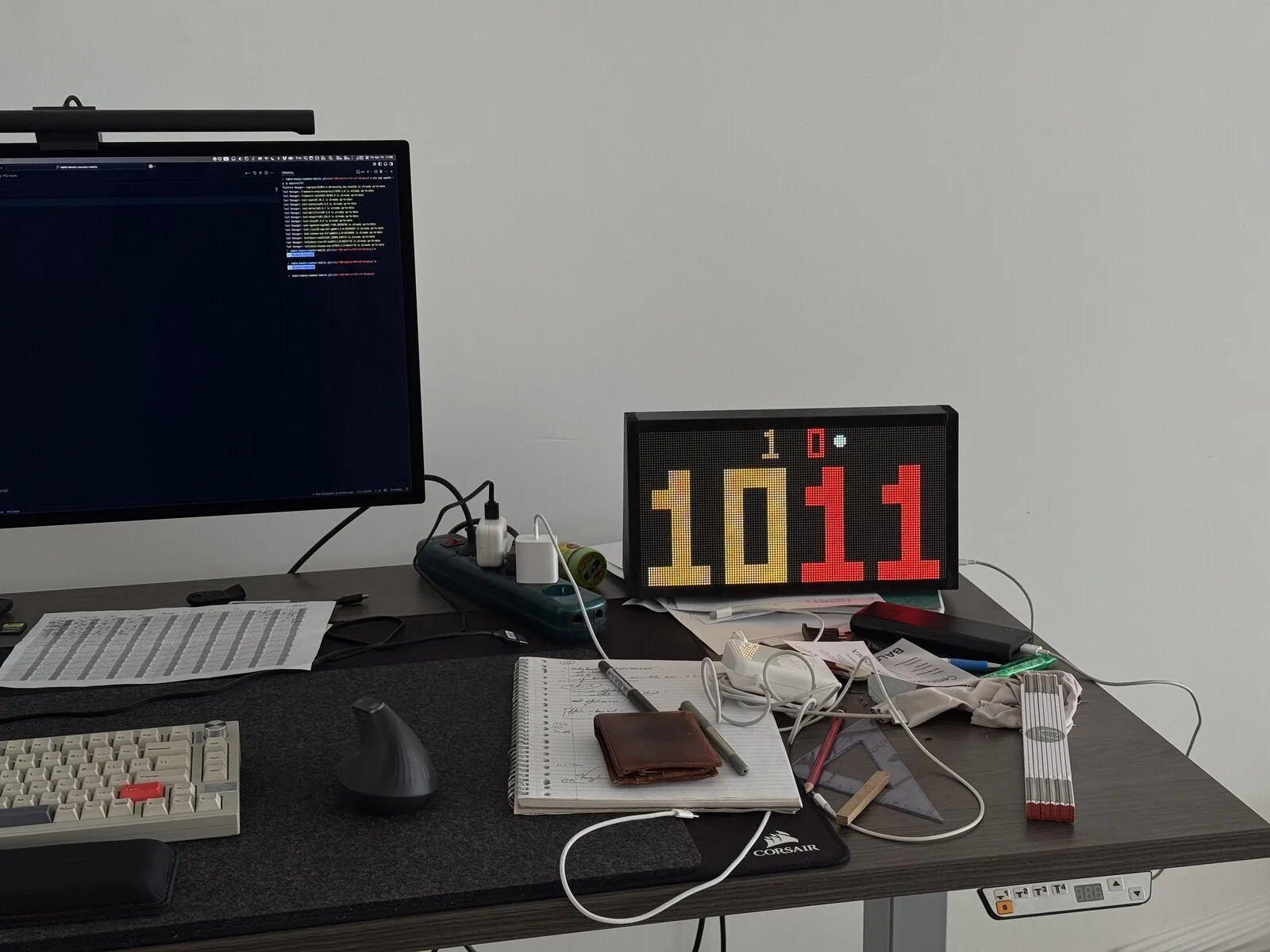
Most of the firmware and the design came to life in coffee shops in Vietnam. It started with a simple 64×32 dot matrix panel. Everything worked. Press a button, and the score, the serve and the sides all updated by the rules. That's when we got excited.

Writing firmware in a coffee shop in Vietnam
Counting points on the panel
Testing the bigger 128×64 panel
The first 64×32 panel, with set scores and serve
The ESP32 on a breadboard

Spring 2025

A box you can still open

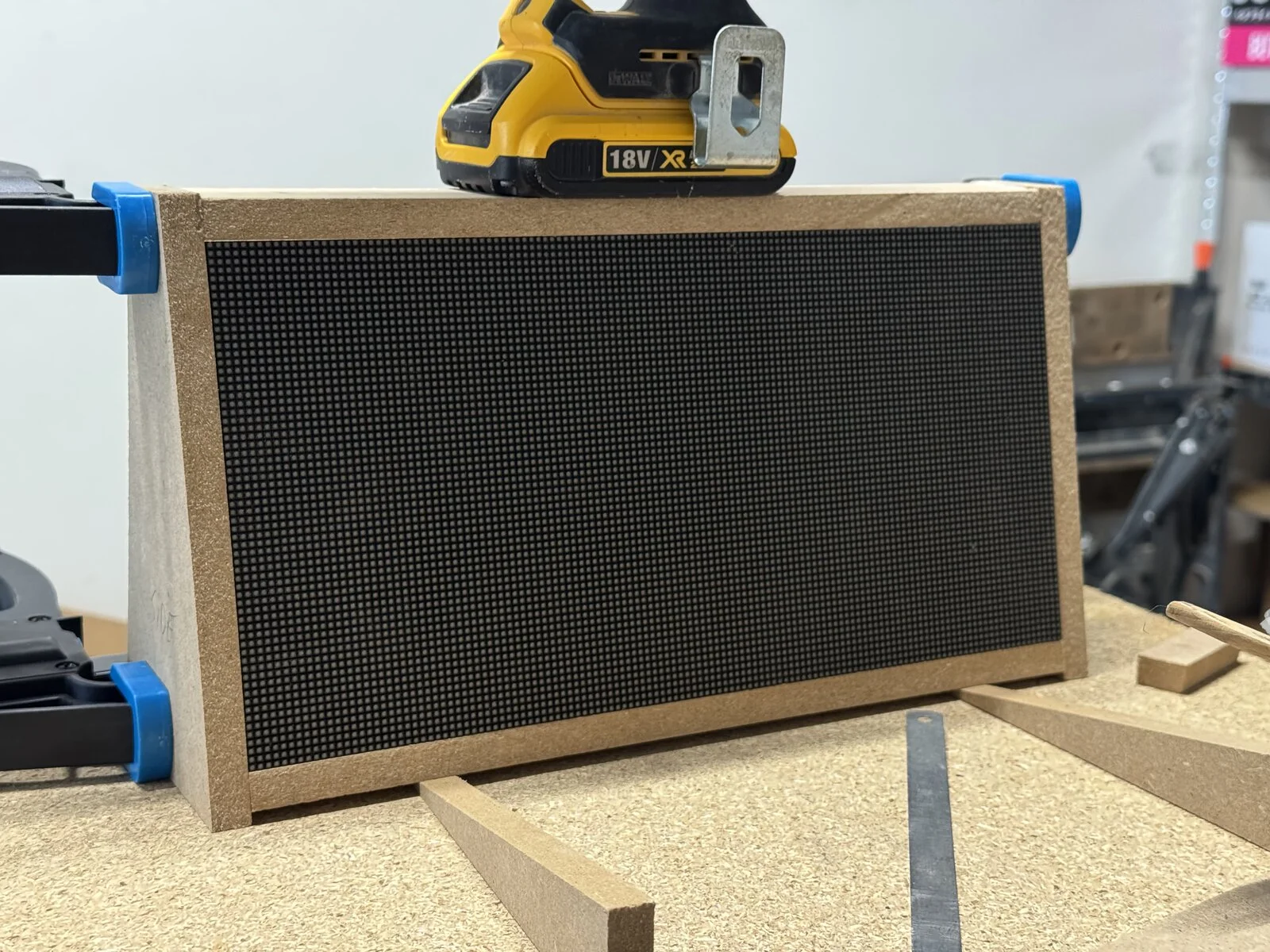
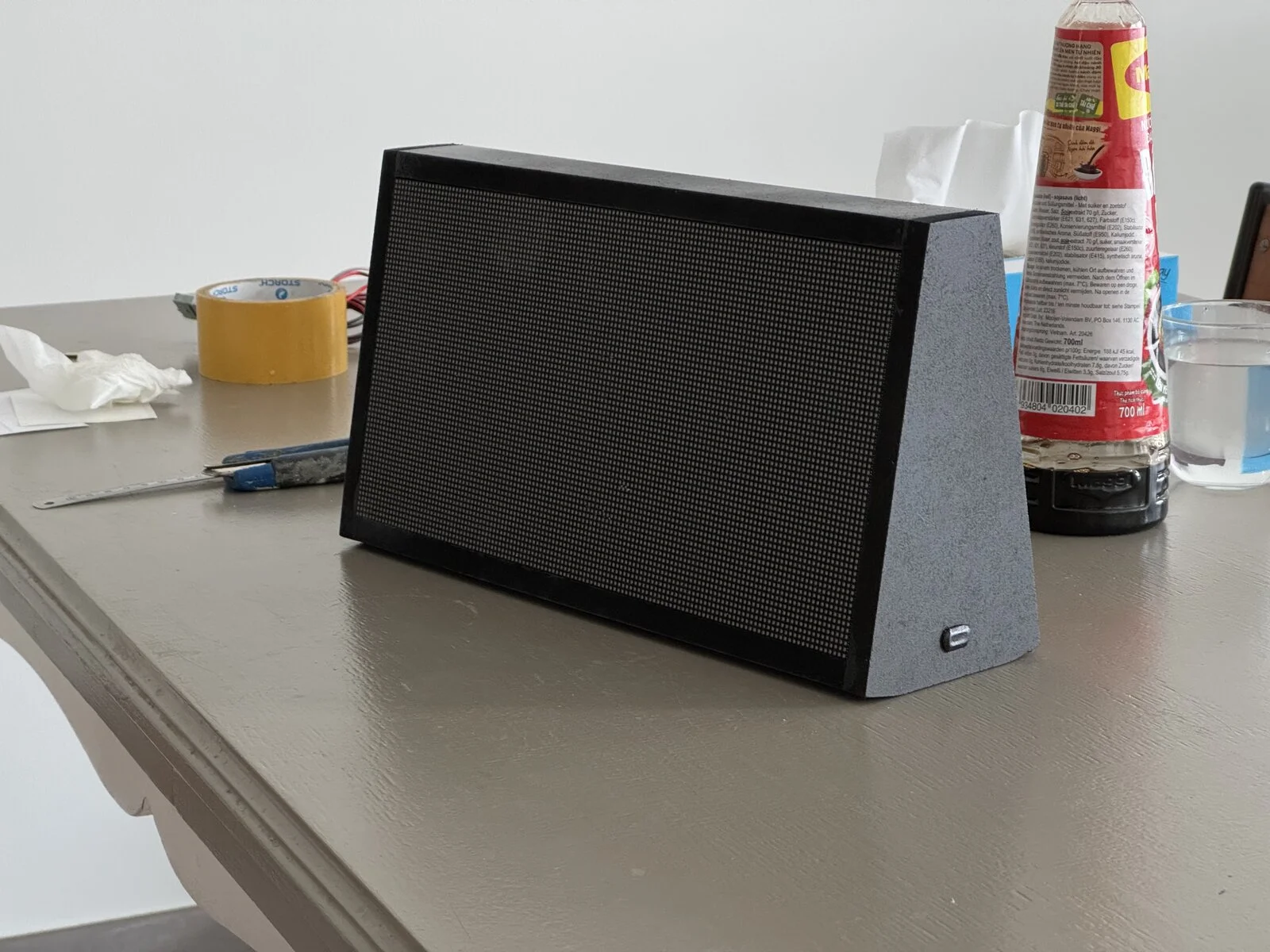
Next came a wooden enclosure. The tricky part: mount the display firmly inside, but still be able to open the box for repairs or firmware updates. It took a lot of sketching before we had an MDF prototype.

We spray-painted it black, added a USB-C port, and in 2025 it was used in a real match for the first time. People at our club got excited about what it could do.

The panel in its first MDF frame
Gluing up the MDF enclosure
Panel in the box
Panel in the box
Painted black, with USB-C
First real match at the club
Back at the desk
Back at the desk
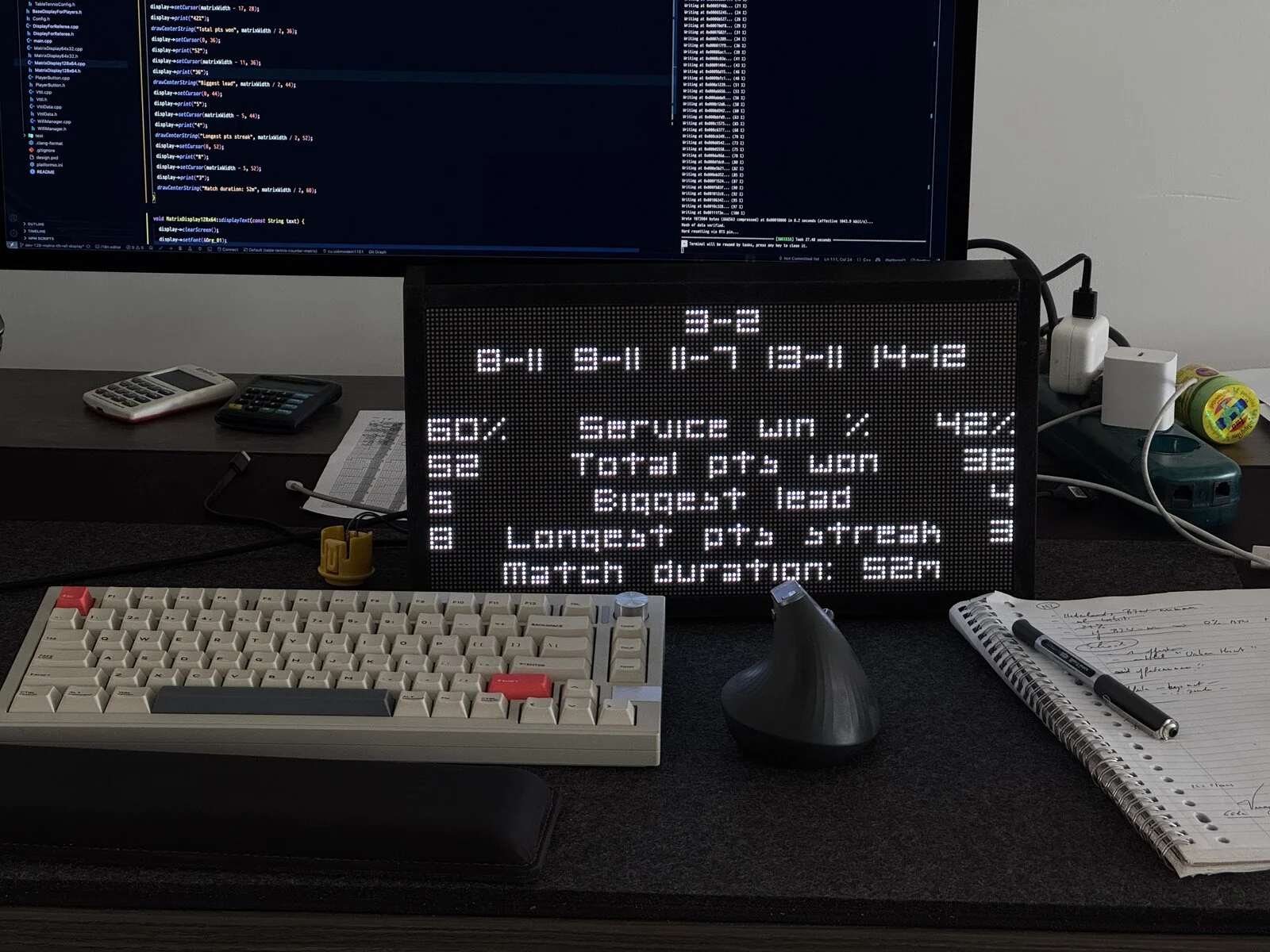
Match stats after the final point

2025

From side project to our project

All this time, Flippr was a side project. Klaas and Roel founded Urban Hunt together, just the two of us, and it was our full-time job. Flippr took shape in the hours around it.

When Roel started showing the prototypes, Klaas got excited too. It brought back memories. When we were younger, we played a lot of tennis together, and we were very competitive. Every time one of us forgot the score, we got frustrated and angry with each other.

That's when we decided to chase this new idea. Urban Hunt is a healthy business, so we use it to help fund Flippr.

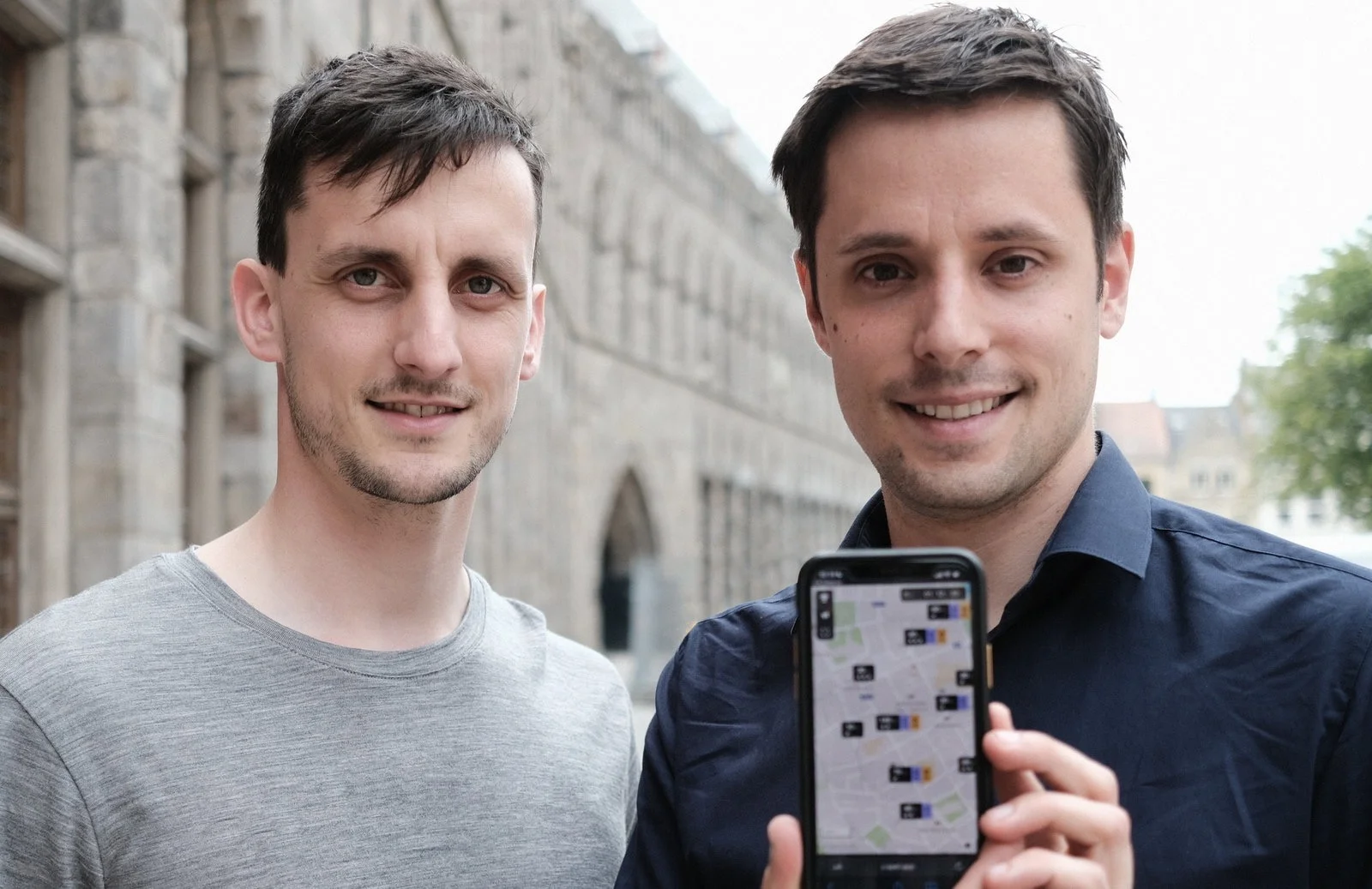
Roel and Klaas, the founders of Urban Hunt and Flippr

Feedback

Two sides, like the paper ones

The club gave us honest feedback. The umpire side only had a small LCD, so if you stood behind the umpire, you couldn't read the score. With a paper scoreboard, you can.

So we redesigned the enclosure with two dot matrix panels, one on each side, mirroring each other. We moved the arcade buttons to the sides of the box, which gives it a pinball machine feel and makes it fun to use. And we put a real battery inside, so no more power bank.

The old umpire side: too small to read from a distance
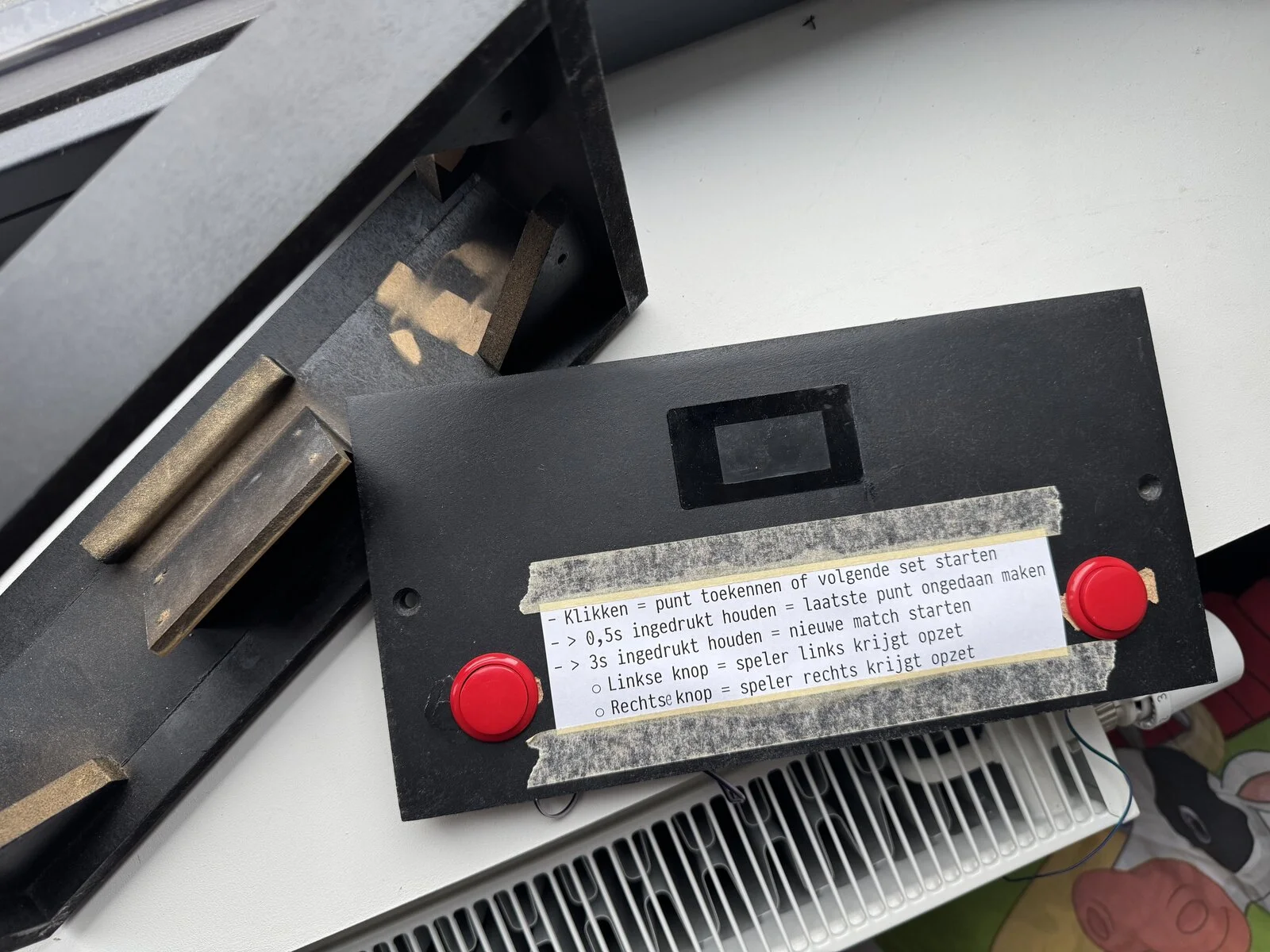
Button instructions, taped on for the club

2026

Learning CAD, buying a 3D printer

With two displays, wood stopped working. Mounting both panels without a single visible screw needed an intricate design. So we bought a 3D printer and taught ourselves CAD, to design an enclosure that looks good and is easy to open for repairs.

Along the way: two 128×64 panels instead of 64×32 to make it bigger, with the pixels closer together so the umpire can read it better. And a lot of research and a pile of acrylic sample sheets to find the right matte, diffused finish. Without it, the dots were much harder to read.

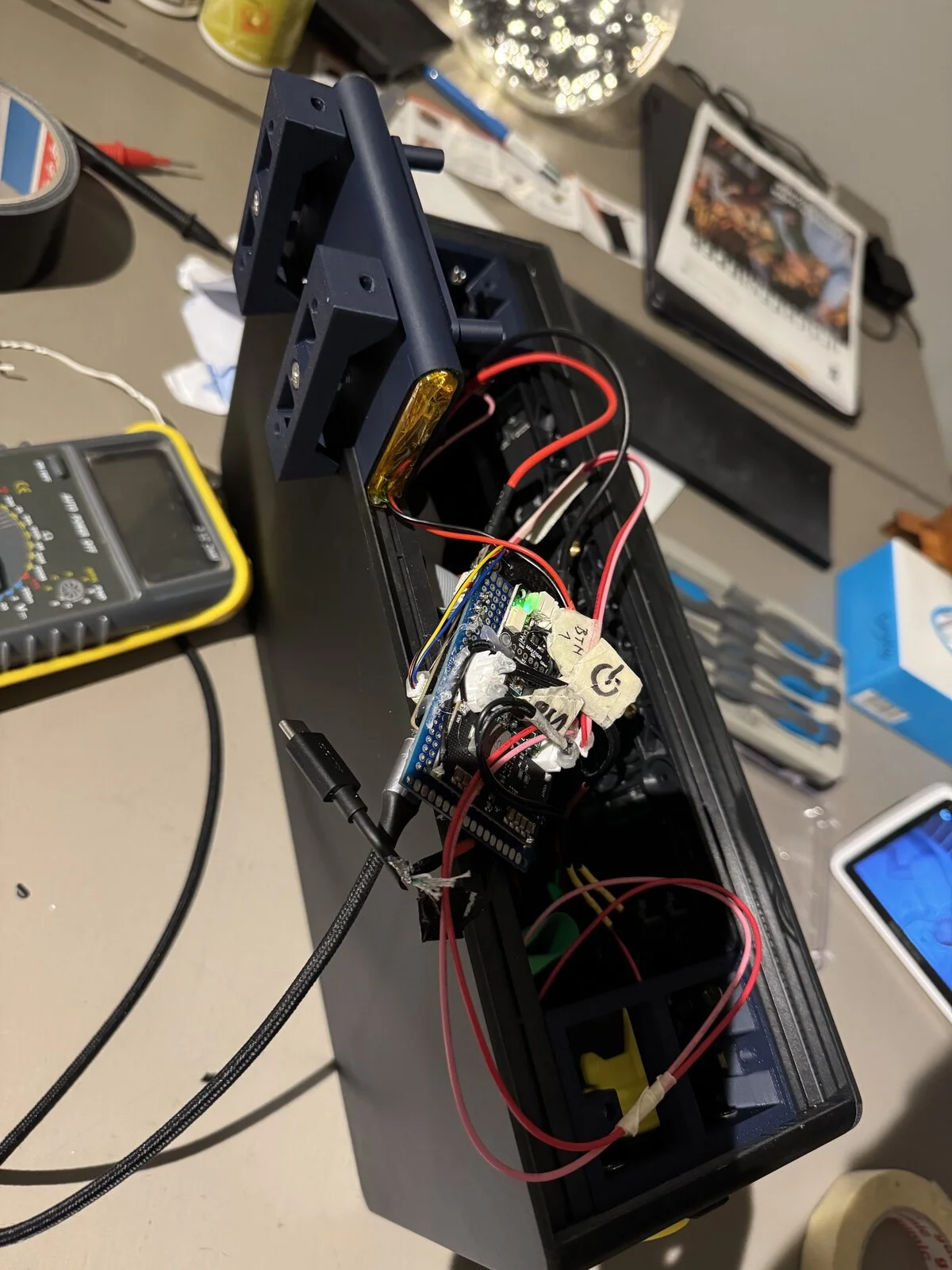
Battery and power board inside
The first fully printed Flippr

October 2026

Clippr: score from where you stand

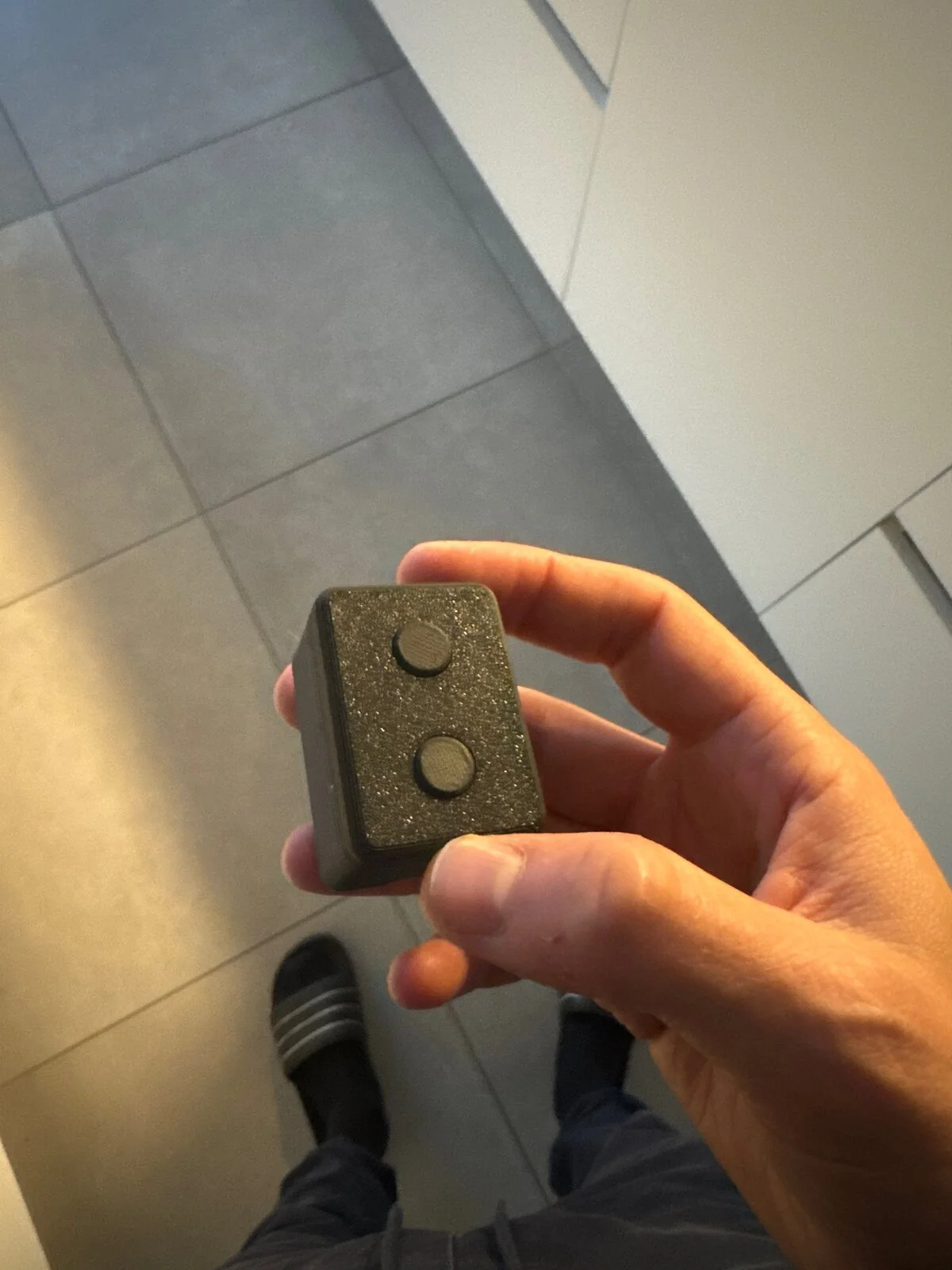
Remember the cube, and the steps to the table for every point? In October 2026 we designed Clippr to fix that. It's a small remote with a red and a yellow button that clips to your waistband.

After each rally, a player taps who won the point, and Flippr updates the score. No umpire needed for a friendly match, and no walking to the table. Every Flippr comes with one.

The breadboard prototype
The 3D-printed prototype: one tap per point
Small enough to clip to your waistband

Today

Flippr

That's how the current Flippr came to be. Behind it runs a real-time MQTT server and a live widget, so anyone can follow a match point by point. Results go straight to the VTTL platform. And we built it so that any other integration can plug in too.